












TRP Vistar drivetrain with Classified Powershift 2-speed hub on a Colnago G4-X gravel bike. © A. Yee / Cyclocross Magazine
Tektro Racing Products, or TRP, is a well-known bicycle component manufacturer based in Taiwan. Tektro produces brake products for all disciplines of the sport: BMX, Road, Mountain, cyclocross, and now gravel. Cyclocross racers in the US recall using Tektro and TRP mini-V brakes as an alternative to cantilevers. When disc brakes came into use for cyclocross, TRP was at the forefront with the mechanical dual-piston Spyre and, later, the cable-hydraulic HyRd. The drop bar hydraulic Hylex had a smooth lever feel, but was displaced quickly by brake-shifter combinations from the large component manufacturers.
A decade later, the TRP EVO12 is a successful 1×12 mechanical mountain bike drivetrain introduced in 2023. In 2025, TRP launched a wireless electronic 12-speed groupset with hydraulic brakes
For years, it was rumored that TRP was working on a drop-bar drivetrain in partnership with Classified of Belgium. The group was spotted on a Ridley at the 2024 Unbound Gravel race, ridden by Arno Van Den Broek of the Classified Ridley team (Rob Britton also rode a Classified hub paired with a Shimano drivetrain that year). Classified produces a 2-speed internally geared wireless hub. TRP unveiled the Vistar//Classified drivetrain at Eurobike a month later and finally released the system in 2025. It satisfies the desire for smaller gear steps in long, fast road and gravel racing.
TRP Vistar//Powershift Shifting
The Vistar// Powershift system is TRP’s wireless hydraulic brake-shift levers with a wireless rear derailleur. The rear hub is the Classified 2-speed hub, which uses a planetary gear system to shift wirelessly between a high and low gear. The through-axle is integral to the hub and houses the battery and wireless receiver. The cassette is proprietary to the hub.
There are two versions available, road and gravel. They have different gear ratios, meaning chainring and cassette combinations, and different rear derailleurs to best handle each ratio. The computer control, a handlebar endcap unit, communicates with the app on your phone, the hub, and the rear derailleur via Bluetooth. It also communicates with your bike computer head unit via ANT+.
TRP Vistar//Powershift Components
The Vistar//Powershift dropbar component group is a 12-speed drivetrain group with integrated hydraulic brake/shift levers, wireless rear derailleur, and the Classified Powershift hub. The cassette is proprietary since it fits around the Powershift hub assembly. Available system chainring sizes are 44, 46, or 48 for gravel and 50 or 52 for road compatibility with the shift system. Classified has its own crankset. The TRP EVO crankset would also work, as would any other that matches the 45mm road chainline or 47.5mm gravel chainline.
The road drivetrain is a 50 or 52-tooth chainring paired with a 12-speed 11-30 or 11-32 cassette and a derailleur with a 34-tooth maximum. This combination yields 16 unique gears. The gravel version pairs a 44, 46 or 48-tooth chainring with an 11-40 12-speed cassette for 15 unique gears.
There are two versions of the rear derailleur. The gravel derailleur capacity handles a maximum 40-tooth cog, while the short-cage road version has a 34-tooth max cog.
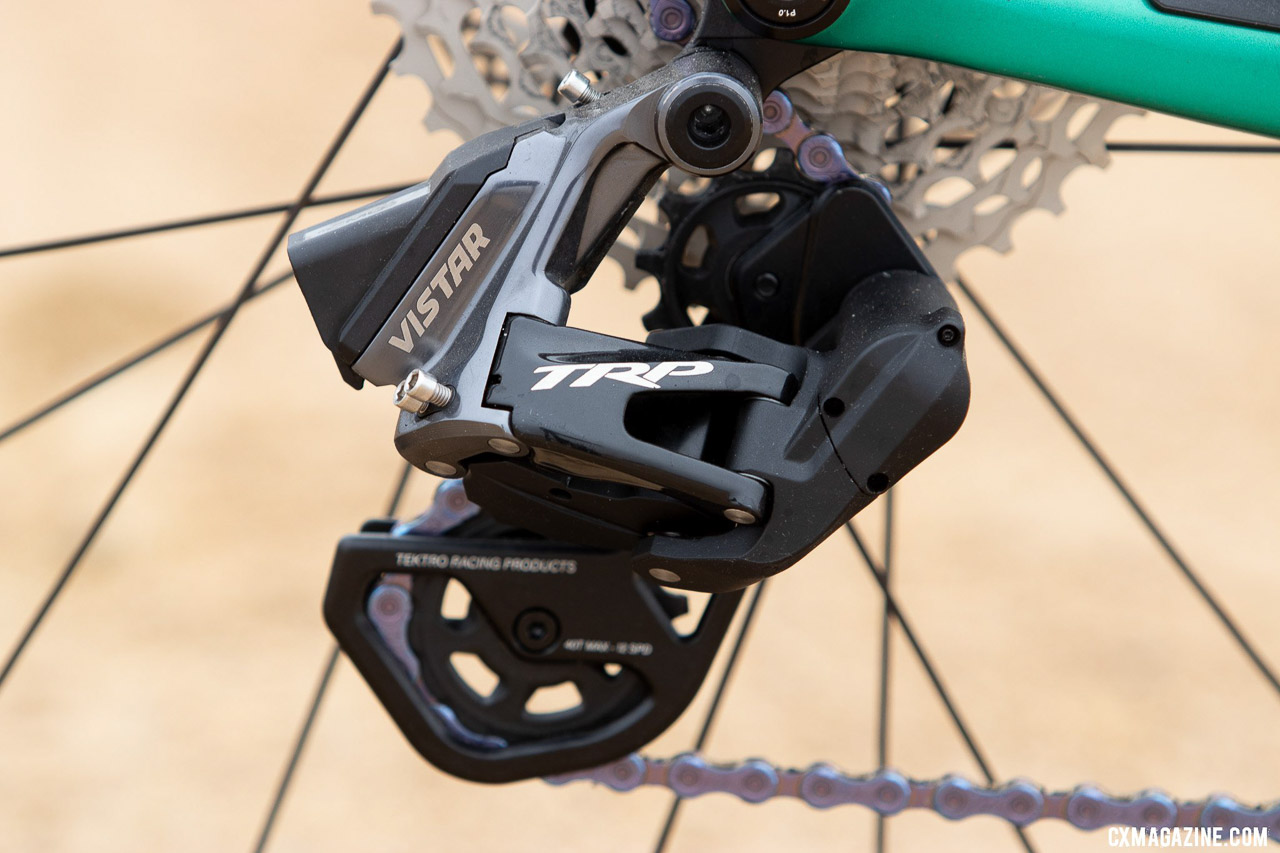
TRP Vistar drivetrain with Classified Powershift 2-speed hub on a Colnago G4-X gravel bike. © A. Yee / Cyclocross Magazine
The Classified crank arm is available in 4 lengths from 165mm to 175mm. It has a direct-mount machined aluminum aero chainring. The spindle is 30mm diameter aluminum attached to the non-drive side. Access to the direct mount chainring is a bit easier with this design since you do not have to work around the spindle. The chainring mounts to the drive arm spline and secures with a lockring compatible with an ISIS bottom bracket tool. The crank on our review bike has a 4iii power single side power meter on the left arm, but we did not test or review that. The crank length we rode is 170mm, and the chainring has 46 teeth.
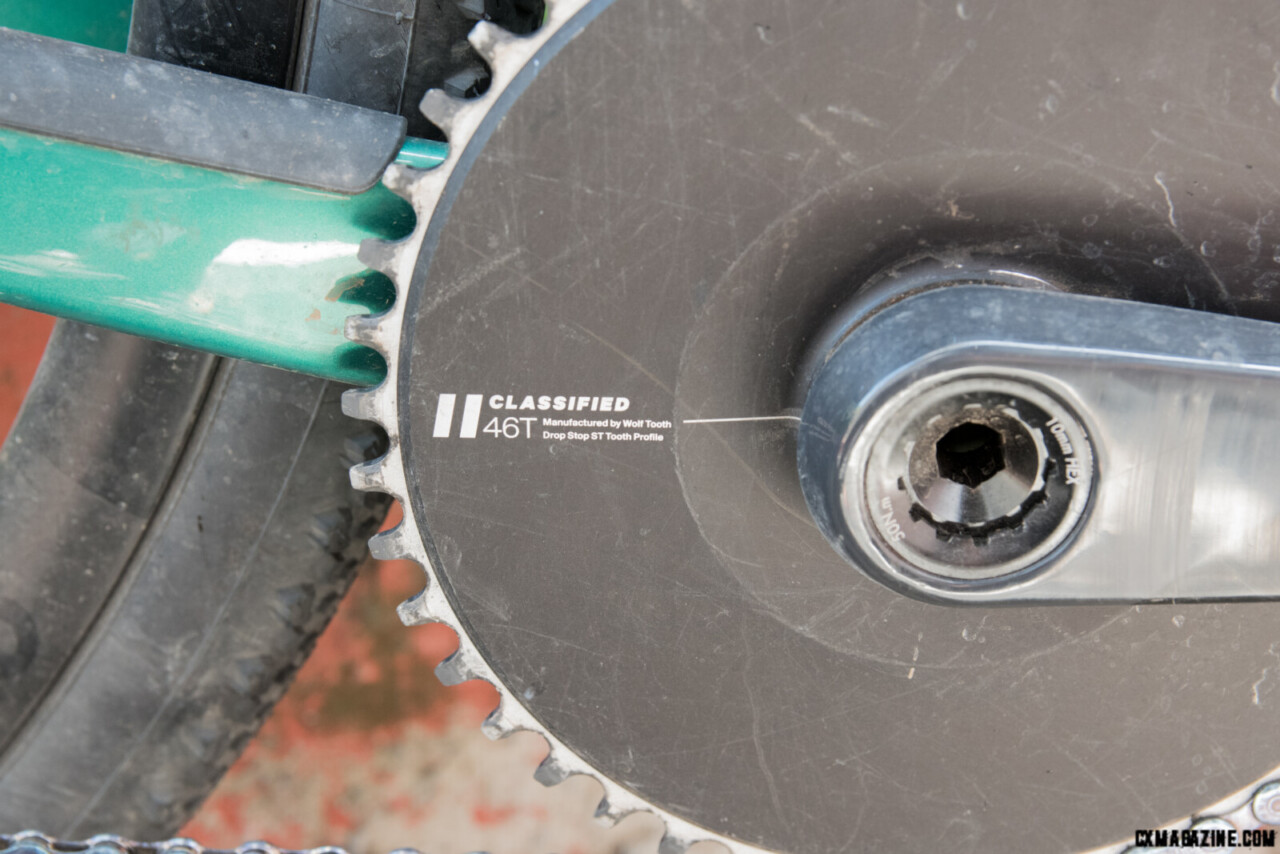
The one-piece machined aluminum wide-narrow 1X chainring by Wolf Tooth Components. © A. / Cyclocross Magazine
The proprietary 12-speed gravel cassette is 11-40 teeth, machined from a single steel billet. This is the only gravel ratio available. TRP has its own EVO 12-speed chain, but it is completely compatible with the KMC X12 chain.
Classified Rear Hub
Classified Components is a Belgian company founded to fix problems associated with the front derailleur. The Classified Components Powershift hub is born from that principle. It uniquely uses a planetary gear system that shifts electronically and wirelessly. The shift changes from 1:1 to 1:0.7, a 30% reduction, similar to a 50/34 chainring combination or other common road double chainring ratios such as 52/36 or 53/38.
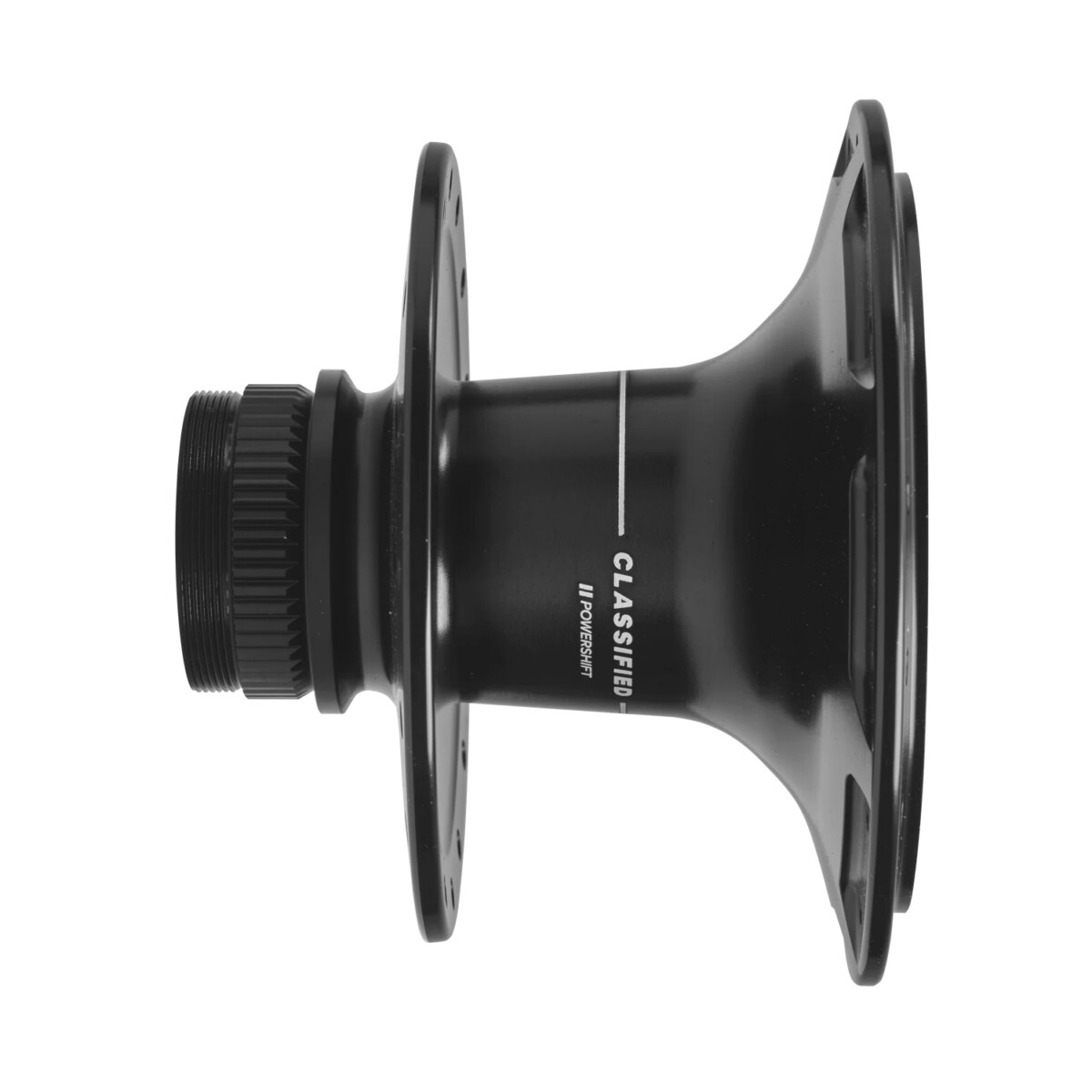
There are two components to the rear hub. The Classified Powershift hub, which hosts the cassette and the internal gearing:
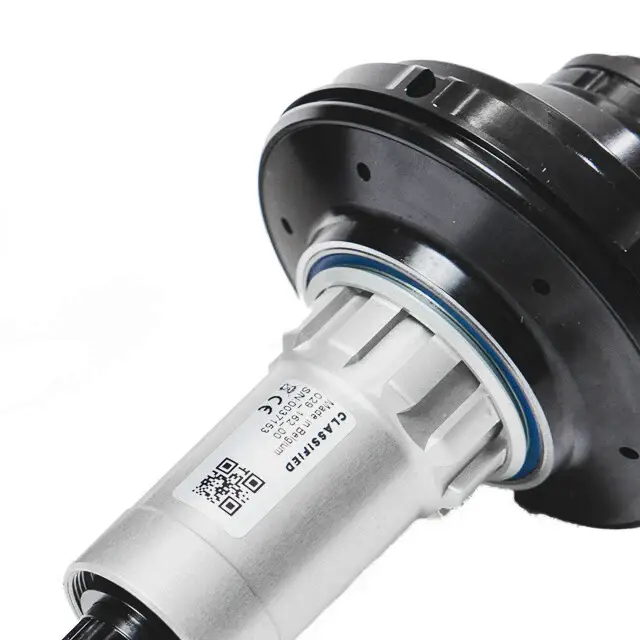
The Classified Powershift Hub Shell:
There is a lot of information and opinion available if you want to better understand the mechanism. Peak Torque on YouTube has a very good explanation of the hub system.
The hub’s internal gear mechanism is on the drive side, beneath a proprietary cassette. The hub electronics, including the battery, are in the thru-axle. The thru-axle lever is plastic and houses the USB-C charging port and antenna.
The hub has a torque arm on the non-drive side that must brace against the frame for the system to work. It should sit under the left chainstay much like a coaster brake arm.
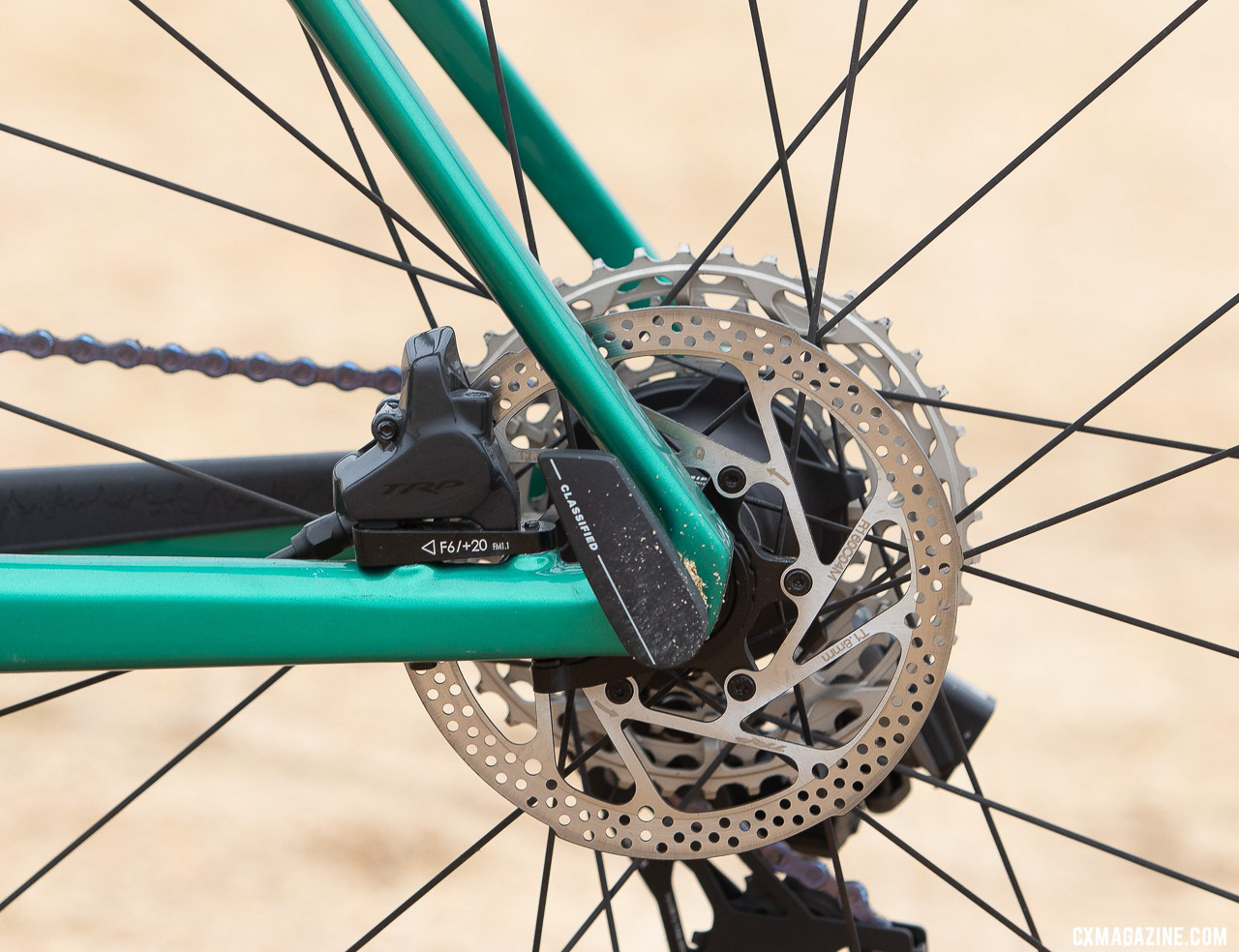
An electronic thru axle with a rechargeable battery? Yes! TRP Vistar drivetrain with Classified Powershift 2-speed hub on a Colnago G4-X gravel bike. © A. Yee / Cyclocross Magazine
TRP Vistar//Classified Connectivity
The TRP CMD app for iOS or Android communicates via Bluetooth to a handlebar endcap unit that is hard-wired to the brake/shift levers. The unit runs on two LR44 batteries, and is paired to the rear derailleur and Classified rear hub via Bluetooth.
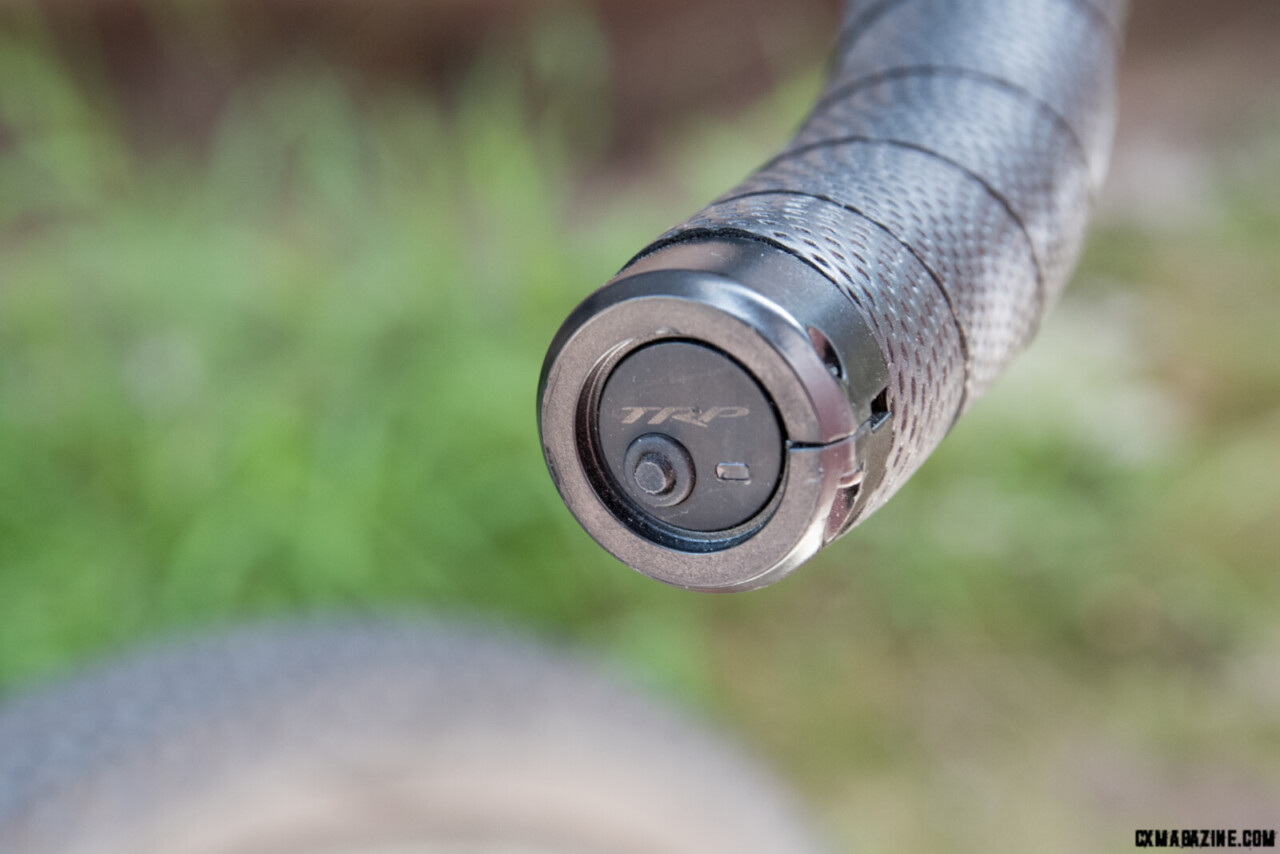
TRP CMD bar-end control module on the right bar end is hard-wired to the shifters. © C. Lee / Cyclocross Magazine
Use the CMD app to set up rear derailleur shift precision and choose between TRP Quantum shifting and manual shifting.
TRP Quantum shifting is sequential shifting of the entire range, with automatic changing of the Powershift hub gear ratio. In this mode, you essentially push one button to move up through the gears and another to move down; the system will know the cross-over point to avoid redundant gears and shift the hub and rear derailleur (almost) simultaneously at that point.
Classified also has an iOS and Android app. The Classified app configures the hub shifting button or switch. That is if you are using a two-button system like the TRP Vistar or a single-button system such as a SRAM shifter. You can also select which button shifts up or down.
For our review I did not use the Classified app, I set up and configured the system via the TRP CMD app.
Cycling Computer Connection
I use a Garmin 840 cycling computer. The TRP Vistar//Powershift system connects to the Garmin via ANT+.
This means most popular cycling computers available now will communicate with the system, and Garmin, Wahoo, and Bryston certainly have screen support to display gear ratios and shift position.
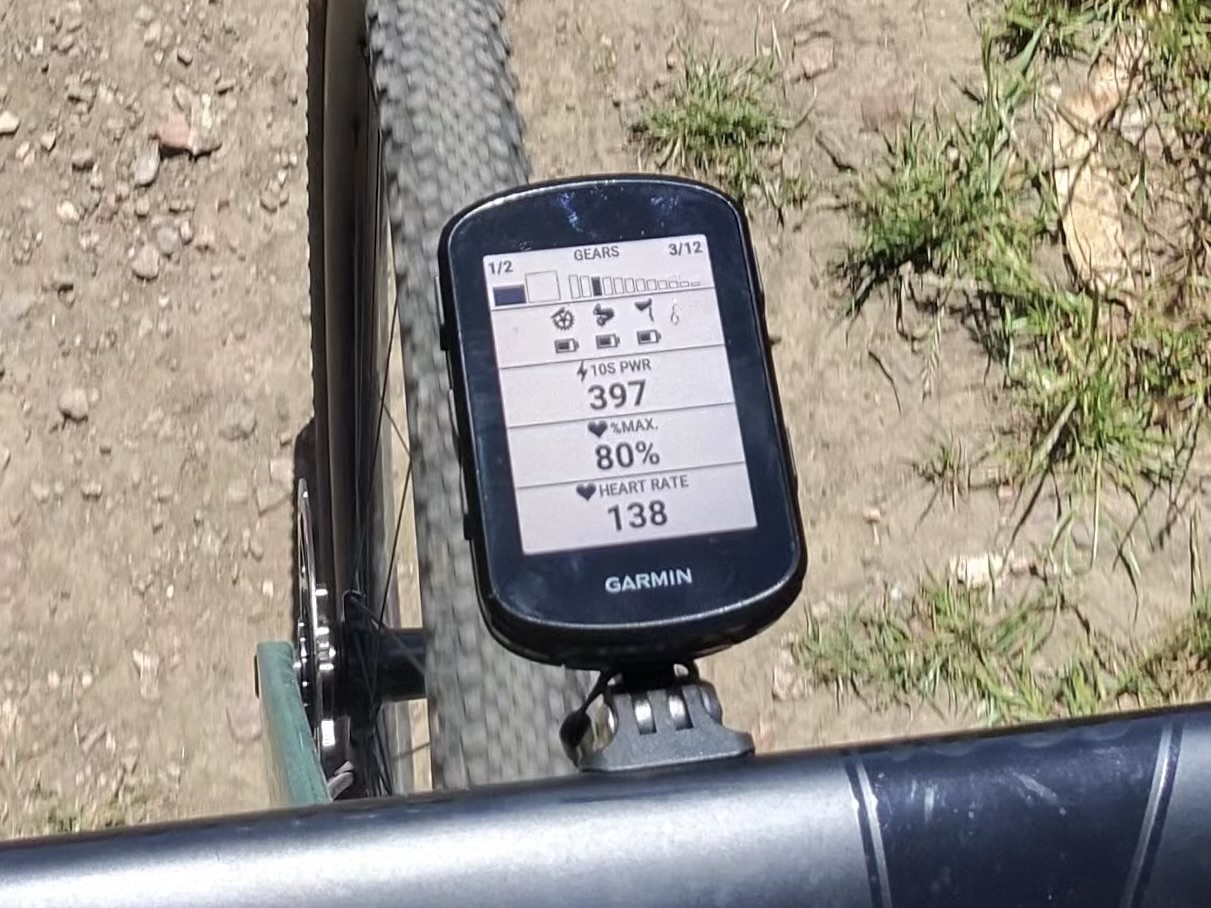
Garmin 840 with graphic display of gear position using the TRP Vistar//Powershift system.
The screen graphic shows the chain position on the cassette and the “virtual chainring” for the hub. This is particularly helpful if you choose to shift the hub manually.
TRP Vistar//Powershift Quantum shift
TRP sent us the system on a Colnago G4 X gravel bike fully assembled. I downloaded the app and connected the system for configuration. I also connected the Vistar//Classified system with my Garmin. Initially, we used Quantum shift mode. With a push of either the upshift or downshift button, configured on a two-button right brake/shift lever. The position of the two buttons is similar to Shimano Di2, and via the Classified app, you can choose which button shifts up and down. We stayed with the standard front downshift, rear upshift configuration, just like Di2.
Quantum shift is an automatic shifting of the hub to yield sequential shifting across the gear range without redundancy. This is why the gravel set-up only shifts 15 gears out of the possible 24 combinations with the 2 x 12 physical gears. This shift configuration is the same as the Shimano Di2 Synco Shift. The system needs to know the gear combination, and with Vistar, this is via the CMD app. Hence, the set chainring and cassette combinations mentioned previously.
Quantum shift cannot be configured quite as precisely as the Shimano system, which includes semi-synchro and crossover-dpoint choices. Vistar//Powershift Quantum shift will do all the thinking for you.
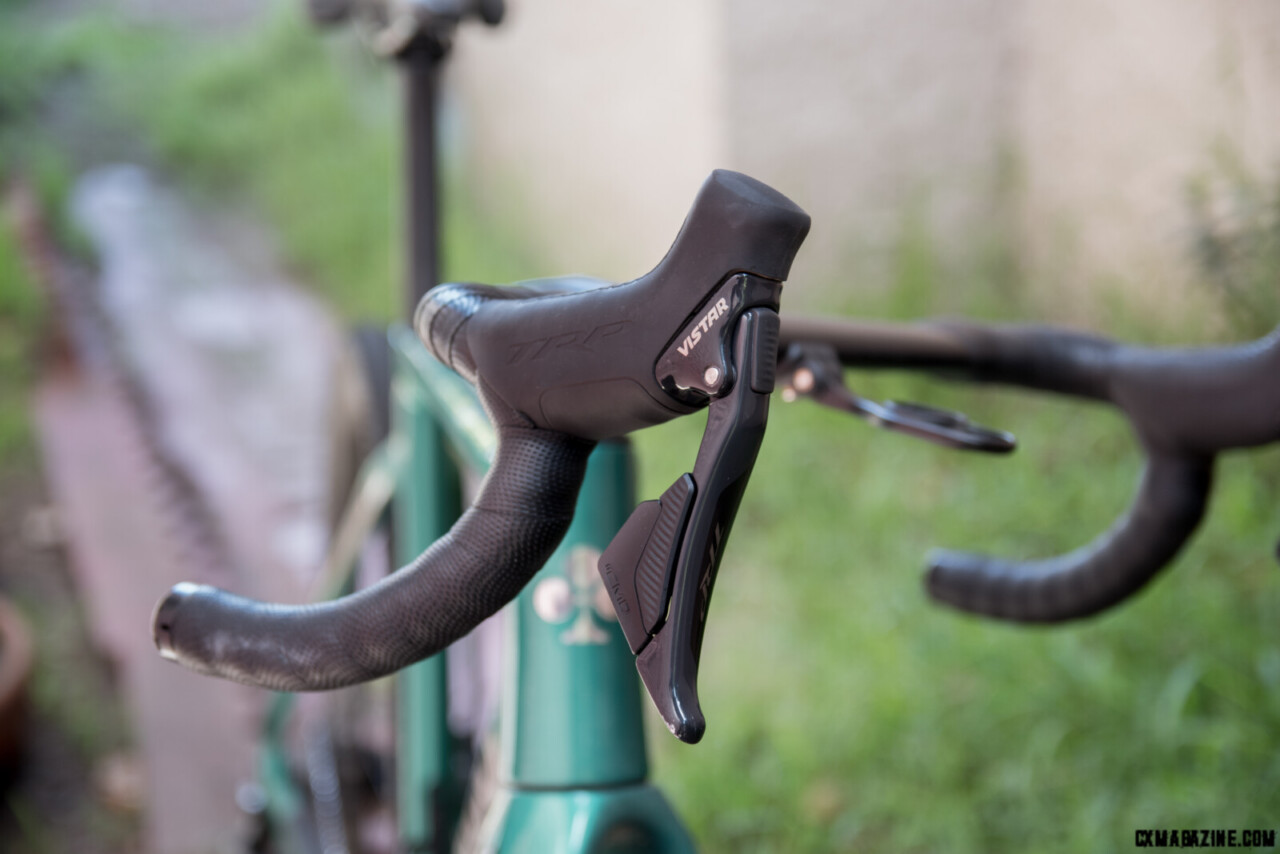
The TRP Vistar lever has a 2-button shift configuration. © C. Lee / Cyclocross Magazine
Rear shifts via the right lever shift buttons was reliable and accurate in our months-long experience riding and racing in all conditions. As you hold the button down, the chain will shift across the cassette in sequence until the crossover point, which, with use, becomes predictable if you follow the display on your head unit. Without that, you don’t always know if you are in the 1:1 or 1:0.7 hub ratio. At the crossover point, the chain position will go two steps in the opposite direction of where it was going while the hub simultaneously shifts internally. It feels clunky and a bit startling.
If you are pedaling under full power, there is a moment of hesitation at that crossover point, since the chain moves 2 cogs while the hub is shifting. The internal hub shift is perhaps a bit smoother and certainly quieter than the front derailleur shift of the Shimano Synchro shift. Still, if I were shifting manually, I would shift the rear derailleur and internal hub gear separately. This feels smoother, although it is certainly less efficient, and I am less aware of the accurate gear sequence.
In Quantum shift mode, the hub can always be manually shifted with the left shifter, overriding the system sequence. The Quantum Shift system will automatically continue the sequence from the new gear you selected.
TRP Vistar//Powershift manual shifting
In manual mode, selected via the TRP CMD app, the system shifts as a traditional 2X, and any of the 24 combinations is available. Perhaps I am a control freak, but I certainly prefer this method. The left lever buttons handle the hub shifting just as they would a front derailleur on a typical 2X system. You don’t get a visual clue of the shift, so you will need to view your bike computer or go by feel.
The 30% gear reduction of the Classified Powershift hub is similar to classic combinations of traditional double chainring systems such as 53×39, 52×36, 50×34, or 46×32. Riders used to riding with a 2X system will feel immediately familiar. For comparisond, the classic cyclocross combination of 46×36 is a 20% reduction.
Battery Life (Batteries Lives?)
There are three battery systems to power the Vistar//Powershift drivetrain. Two LR44 batteries are in the bar-end unit that connects to the shifters and transmits commands. The rear derailleur has a small, removable rechargeable lithium-ion battery. TRP claims the rear mech battery will last 40-50 hours per charge, and in our use, that was about right, erring closer to 40 hours. I would argue it is less than that since you don’t want to leave the house with your battery below 20%, even if you have a spare. TRP does have a spare battery holder that mounts beneath the bottle cage.
The rear thru-daxle recharges via a USB-C port on the end of the plastic handle. Since hub shifting occurs with much less frequency, the battery lasts twice or thrice as long. I have battery life displayed beneath the shift graph on my cyclometer to keep an eye on things.
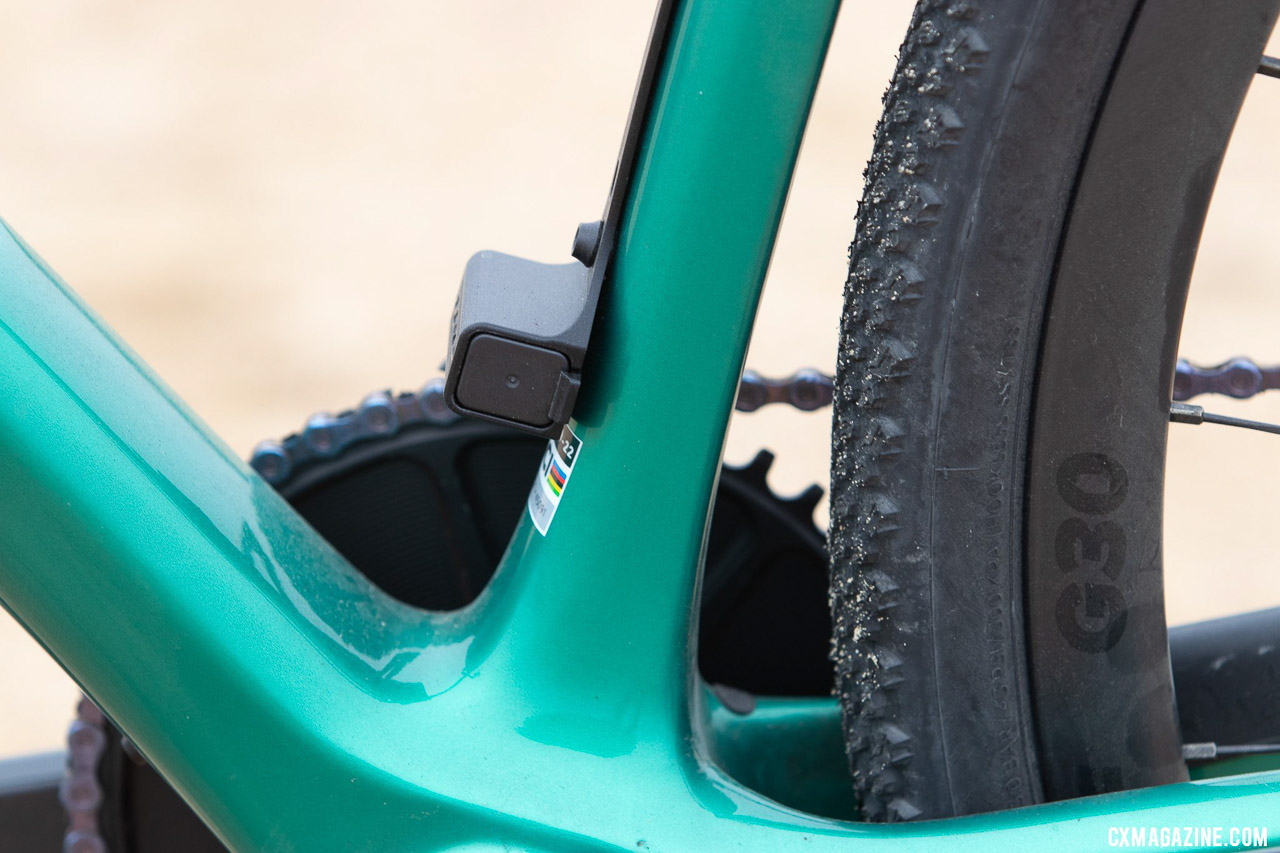
TRP Vistar drivetrain with Classified Powershift 2-speed hub on a Colnago G4-X gravel bike. © A. Yee / Cyclocross Magazine
Out of this World Efficiency?
Classified claims a 99% efficiency for its planetary hub with both direct and reduction gears. There is a white paper link on the Classified website that provides proof. I am not a mechanical engineer, but I find that hard to believe, particularly in the reduction mode when the planetary gears are engaged. White papers are persuasive pieces. Some skeptics have their own analysis of the Classified Powershift hub efficiency. Regardless, if you are pursuing marginal efficiency gains, you may want to consider these claims both ways.
The Classified Powshift hub offers the simplicity of a single chainring while still providing the gear steps many riders like. Front derailleurs take up potential tire space, and double chainrings require frame clearance. A dropped chain can occur during a front derailleur shift, often when derailing from the big ring to the small. A dropped chain can jam between the chainring and frame, causing frame damage. Of course, some home (and pro) mechanics struggle to adjust a mechanical front derailleur, and not all setups have adequate trim options to keep all gear combinations quiet.
The Verdict
With extensive miles on the Vistar//Powershift system, we like its shifting. It has advantages over a double chainring and front derailleur combination. However, it is expensive and bound to a particular rear wheel. You can run a non-Classified 12-speed rear wheel with road spacing for a 1x drivetrain (think cyclocross).
This system has its benefits for long events, when you want minimal chain fouling, but need a wide range with fairly narrow steps. With Quantum Shift, you don’t have to fumble to find the next gear. For cyclocross, you might want to go with manual mode, since the cross-over hub-plus-rear shift is momentarily startling and can happen right when you are making your move.
I like that this innovative system exists. It is a thoughtful attempt to solve a problem and challenges the status quo. But how significant was the problem? That’s for the potential customer to decide.
The drivetrain has potential when you consider the cyclocross and gravel implications of using one bike. You could conceivably use a 1x crankset with a smaller chainring than Classified offers and a normal 12-speed rear wheel for cyclocross, using only the Vistar components. Then swap in the Classified rear wheel/cassette/thru-axle and chainring for gravel, adding a much wider gear range for hillier rides that are longer than a 45-minute race.
Is this easier than removing a front derailleur, swapping a 1x crankset for a 2x, and swapping a 2x derailleur for a 1x derailleur? Yes, but also more expensive.
We don’t think the system is for those obsessed with marginal gains, but it’s an attractive option for those who value wide-range gearing of mullet-type 1x setups but want smaller gear steps and don’t want to deal with the hassles of a front derailleur.
TRP Vistar//Classified Components
Classified Powershift hub CD47 142mm thru axle USD 900
Classified Smart Thru Axle USD 165
Vistar cassette Gravel 11-40 CL 8040-12 USD 210
Vistar Derailleur Vistar hydraulic brake/shift levers R/L pair, including flat-mount calipers USD 500
Vistar bar-end unit USD 66
Classified carbon crankset 165mm-1754mm USD 350
Classified Aero chainring 46, 48, 50, 52 USD 224
TRP EVO 12-speed chain USD 80.50
Total USD 2,874.50





No Comment