








In December 2025, Wout van Aert started his abbreviated cyclocross campaign with Visma-Lease a Bike. He was using Wolf Tooth Components’ new ALT pedals.

ANTWERPEN, BELGIUM – DECEMBER 20 : Van Aert Wout (BEL) of Visma Lease A Bike in action during the 5th leg of the Antwerpen UCI Cyclocross World Cup 2025-2026 a cyclocross race for Men Women on December 20, 2025 in Antwerpen, Belgium, 20/12/2025 – Photo by Peter De Voecht/ PN/ Cor Vos 2025
That’s quite a coup for the small Minnesota company. Granted, Van Aert’s ‘cross campaign was cut short by a fall in the snow and consequent broken ankle. At least his pedals were not to blame. During Van Aert’s short cyclocross season, he offered immediate feedback to Wolf Tooth about the ALT pedal. Wolf Tooth in turn machined some changes and sent the modified version back to Europe overnight so Van Aert could race them two days later for further evaluation!
View this post on Instagram
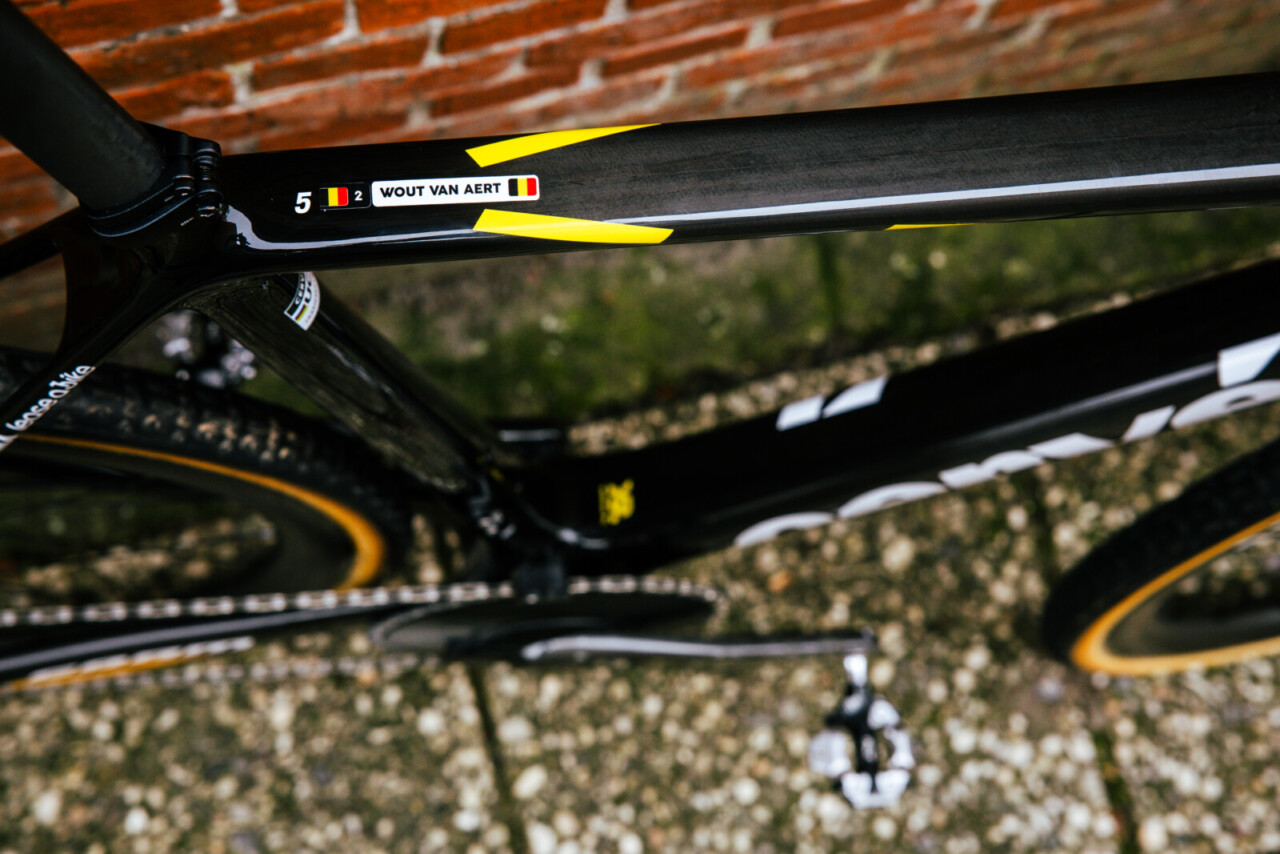
Wolf Tooth Components’ ALT pedals on Wout van Aert’s Cervelo cyclocross bike.
Since his early career, Wout van Aert has used Time ATAC pedals for cyclocross. When Shimano sponsored Visma Lease a Bike he switched to Shimano SPD pedals. SRAM is component sponsor since 2024, and I thought I’d see van Aert back on SRAM-owned Time pedals. It’s nice to see the collaboration with a small independent company. Of course, professional riders are often spied riding prototype equipment, such as the prototype Shimano SPD pedals we saw on Mathieu van der Poel’s WC bike a few years back.
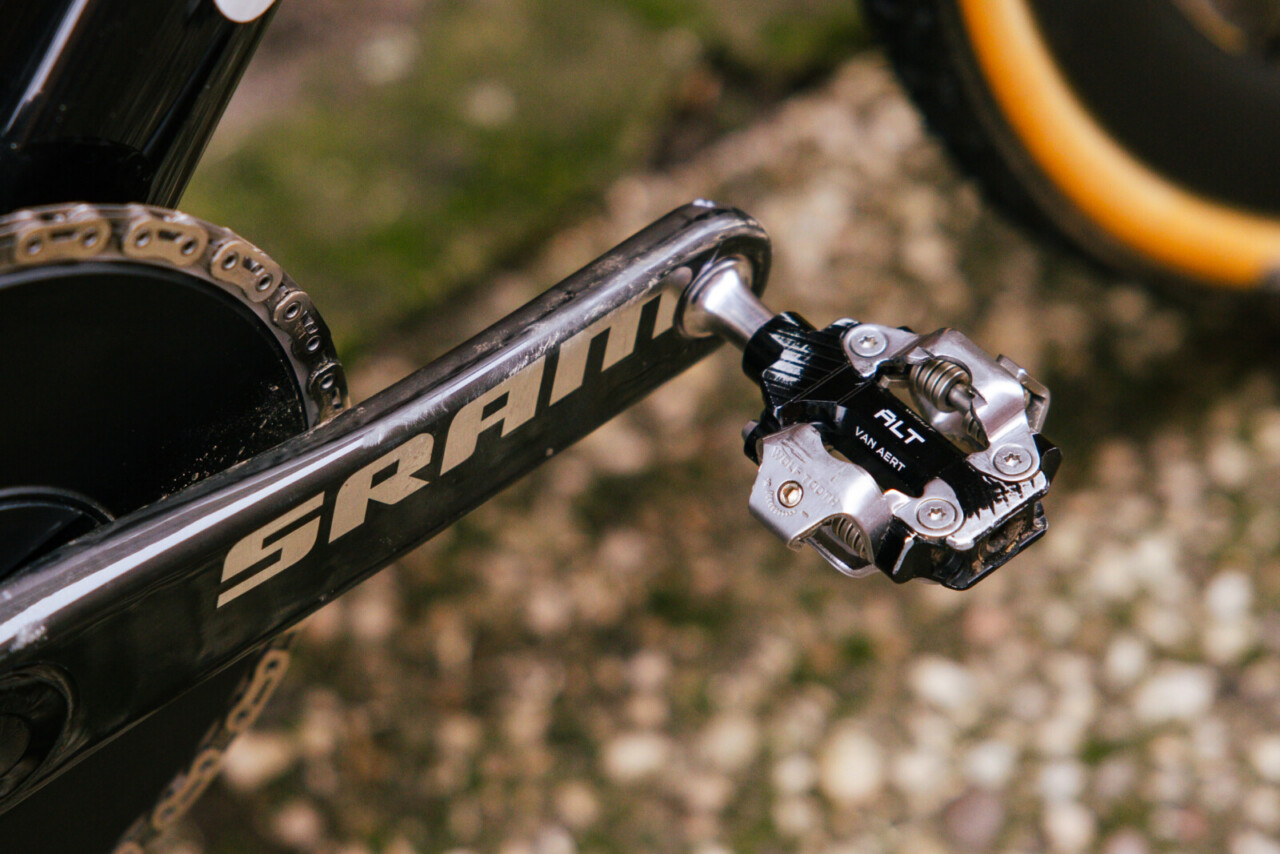
ALT van Aert. Wout’s custom Wolf Tooth ALT pedals
Wolf Tooth ALT
Wolf Tooth Components produces several pedals, flat and clipless. The clipless (meaning no toe clips, but perhaps better described as clipped-in) pedals use the Shimano Pedaling Dynamics (SPD) system. This is the most common off-road system because it has proven reliable for decades. The Shimano patent expired in 2019, so pedal companies no longer require a licensing agreement with Shimano to use the design.
We’ll compare the new Wolf Tooth ALT to its closest competitors. We’ll ignore the smaller brands and skeleton body pedals for this SPD-compatible comparison. We do not know where Wout van Aert’s collaboration will lead. We are riding the ALT pedal that is available now. We did not include the new One Up Components SPD-compatible XC pedal in this comparison, but thought they could be a player. We hope to review those in the near future.
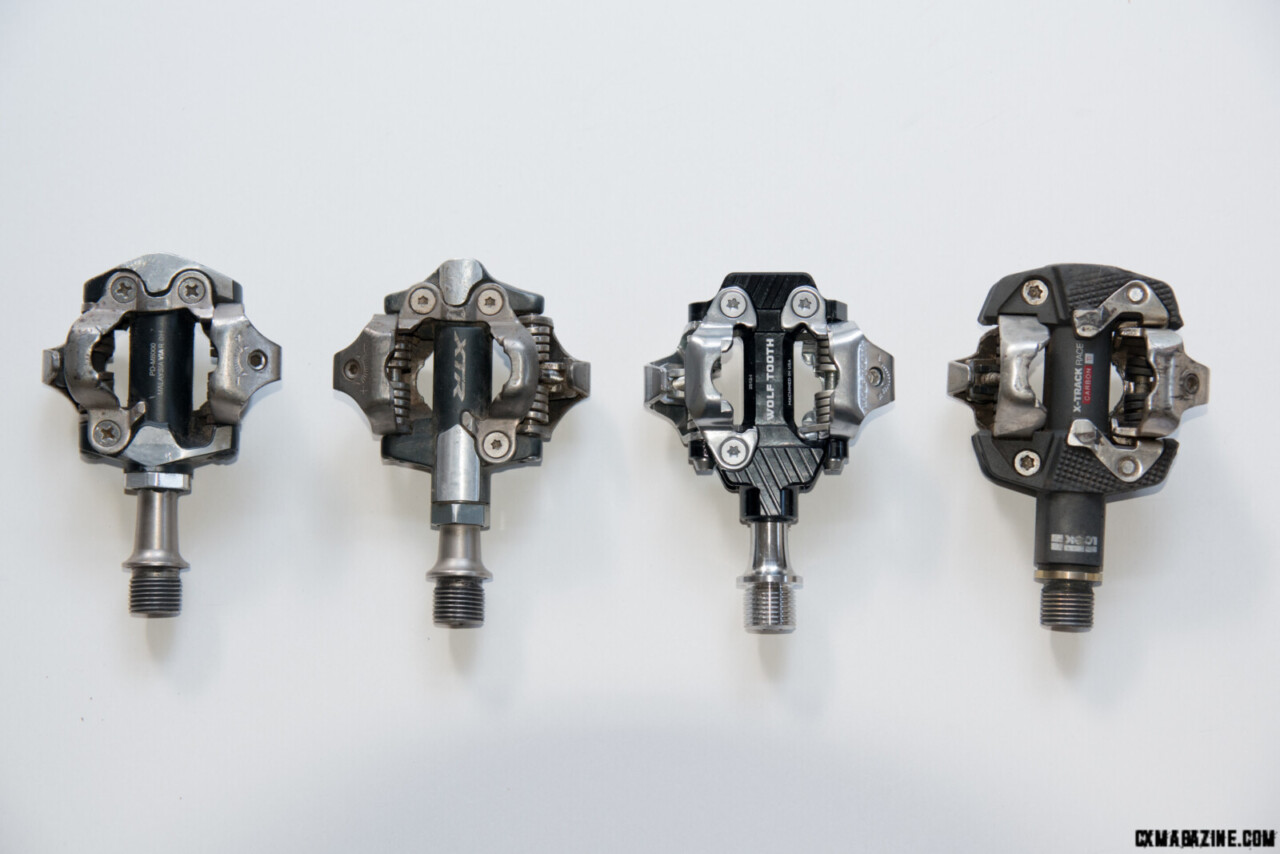
The Wolf Tooth ALT pedal sits among other top performers.
Pedal Dimensional Differences
The $210 Look X-Track Carbon Race is the lightest of the group, edging the Wolf Tooth ALT by a measly 1 gram per pedal. It has a carbon fibre-loaded plastic body and a titanium spindle, which makes the pedal chunkier. Despite its large body, the Look X-Track tread platform does not extend as far inboard as the Wolf Tooth ALT or Shimano XTR.
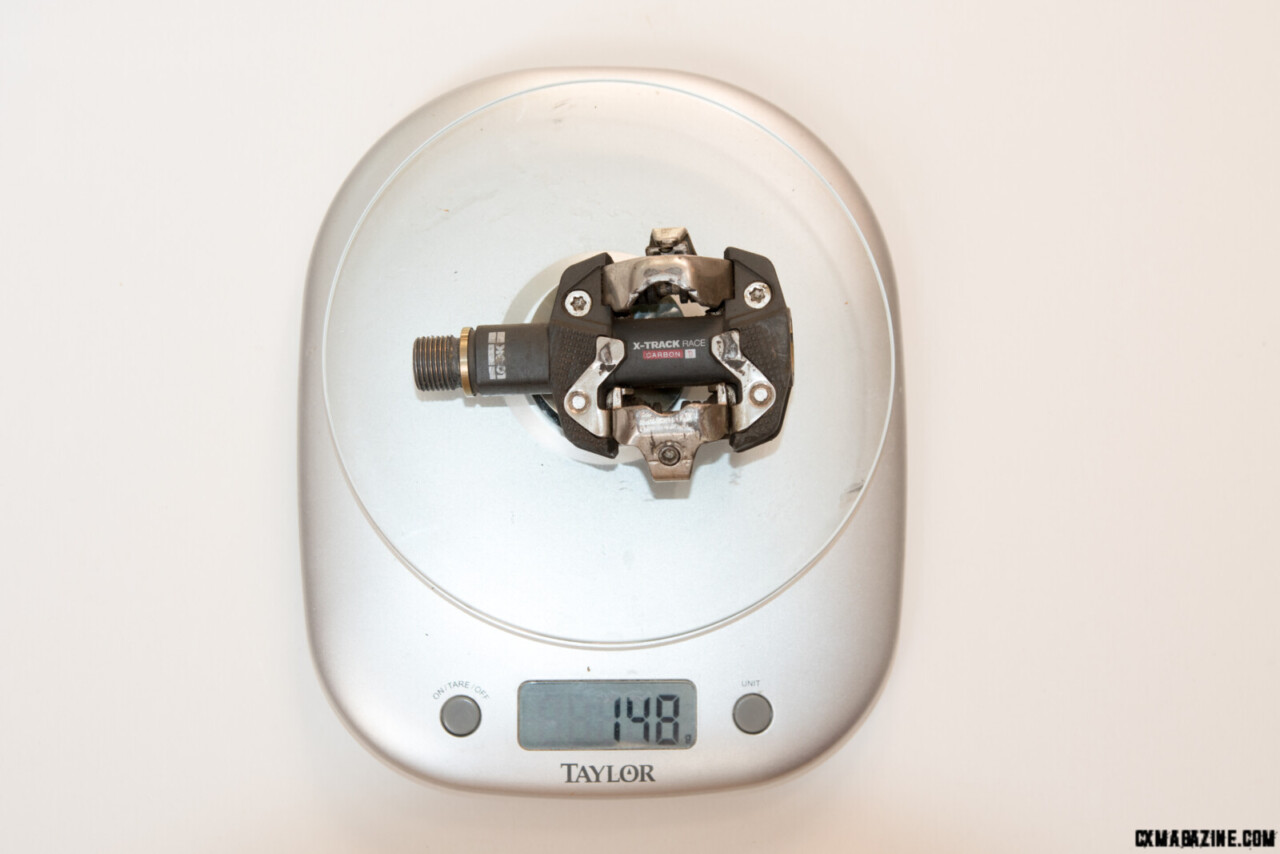
The Look X-Track Carbon Race is the lightest of the bunch by a slim margin.
The $220 Wolf Tooth ALT is the second lightest of the comparison, with a polished stainless steel spindle and aluminum alloy pedal body. The axle is thin, and so is the pedal body. The Wolf Tooth ALT has the thinnest axle and thinnest body of the pedals compared here. The axle is 10.2mm where it enters the pedal body. For comparison, the XTR is 11.2mm on the same side. The axle is thin, but is the same diameter for most of its length, and tapers slightly at the end. There is no abrupt diameter change that could be a stress riser. For comparison, the Shimao spindle tapers continuously along its length, with steps for bearing races.
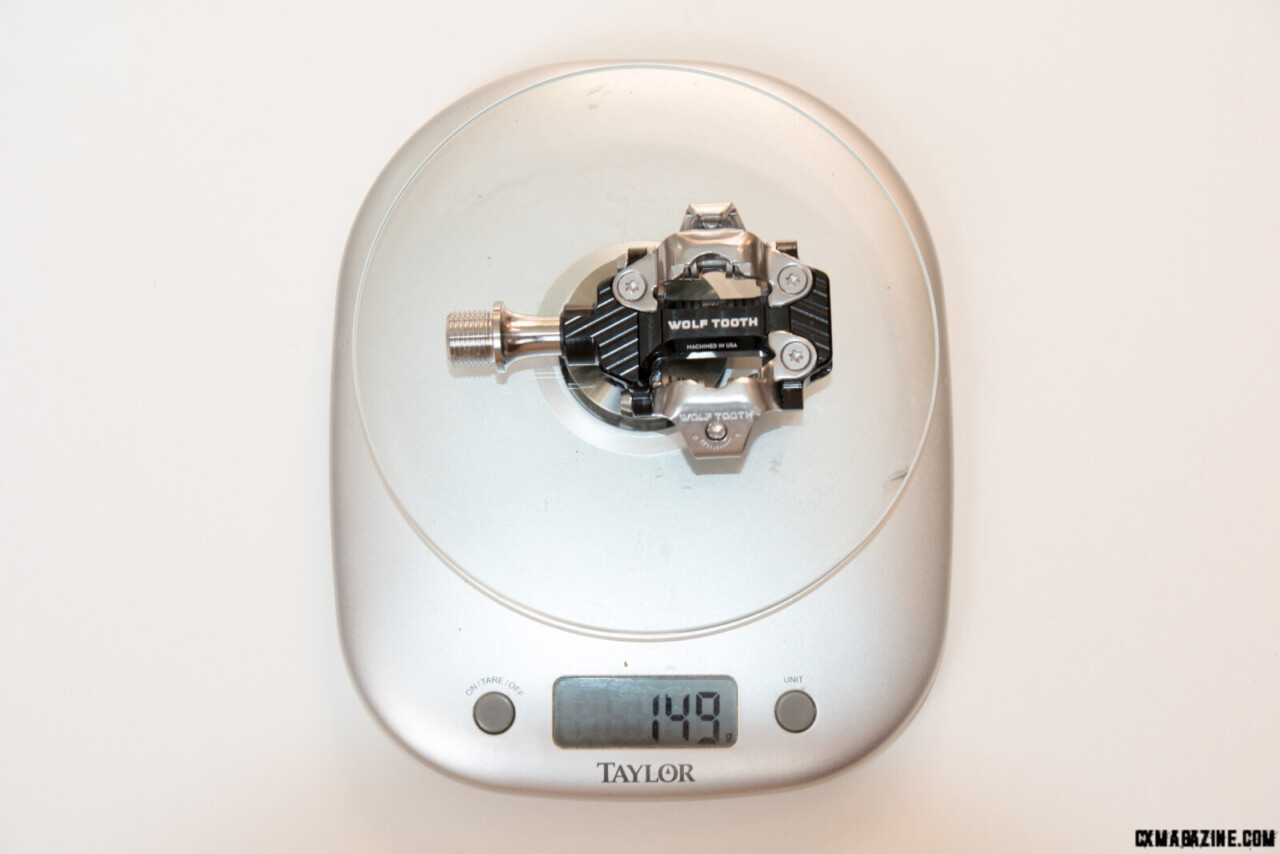
The Wolf Tooth Components ALT pedal is lightweight
The slim spindle of the Wolf Tooth ALT yields a thin pedal body around the spindle, 2mm thinner than the XTR, which is the next narrowest. The ALT has more mud clearance within the pedal body than the XTR. Both the ALT and XTR platforms support the shoe tread and extend horizontally by the same amount inboard and outboard.
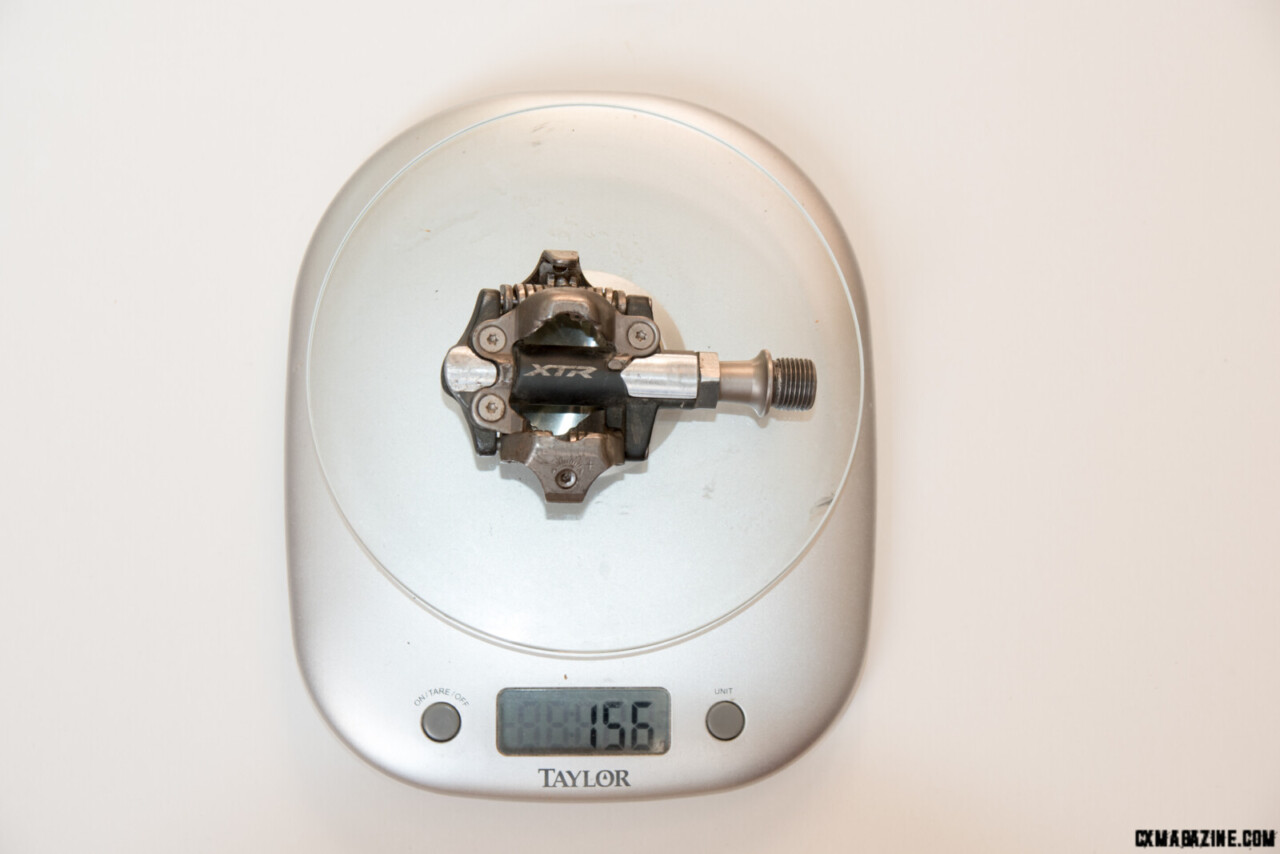
The venerable Shimano XTR M9100 is a competitive weight
The Shimano XTR M9100 is replaced by the $200 M9200, which is dimensionally the same as the M9100 but has a different end cap. We did not have a pair of M9200 on hand.
Shoe Connection
Many companies think about the shoe-to-pedal connection, but few execute it well. Shoe tread thickness varies, and there must be some tolerance to engage a shoe with thick lugs surrounding the cleat. Most pedals with 2-bolt cleats have some shoe wobble when engaged.
Look did a good job eliminating shoe rocking with the long-discontinued Quartz. Despite its problems, the Quartz pedal included cleat shims to ensure perfect engagement with the shoe lugs sitting on the pedal body, yielding a solid feel when engaged. The latest Look X-Track is SPD compatible but lacks the same precise connection with the shoe tread, so the shoe rocks on the pedal when engaged.
The new pair of Wolf Tooth ALT pedals has a solid feel with no rocking of the couple of shoe examples I used. I think this is good attention to detail.
The top of the Wolf Tooth ALT retention mechanism sits 0.3mm closer to the pedal body surface than both Shimano pedals and almost 0.5mm closer than the Look.
The width of the flat tread area outboard and inboard provides the most stability. The Wolf Tooth ALT’s flat section comes further inboard than the Shimano XT and Look, but about equal to the XTR. The XTR’s flat surface, however, is smaller and rounded, whereas the ALT is flatter and wider fore-aft. All this makes pedal contact firmer, at least when the pedal is new and the surface unworn. The XT and XTR pedals in this comparison are used, but I tried my best to measure the unworn sections. The measurements over two sets of XT pedals and one pair of XTR pedals seem consistent.
The proximity of the shoe lugs to the pedal platform affects clipping in with a mud-caked sole, but the difference is slight. I tried the Wolf Tooth ALT with a mud and grass-caked shoe; it does seem to require an extra kick to get in compared to the Shimano XTR. I surmise that it is mostly because the XTR surfaces are smaller and rounder. That extra half millimeter of sole clearance certainly contributes. Wout was not complaining, but he has a mechanic to clean his bike every half lap if needed.

ANTWERPEN, BELGIUM – DECEMBER 20 : Van Aert Wout of Team Visma | Lease a Bike in action during the 5th leg of the Antwerpen UCI Cyclocross World Cup 2025-2026 a cyclocross race for Men Women on December 20, 2025 in Antwerpen, Belgium, 20/12/2025 – Photo by Peter De Voecht/ PN/ Cor Vos 2025
Mud clearance aside, I prefer the solid, stable feel of the Wolf Tooth when pedaling. When not racing cyclocross, mud clearance is less of a problem. Even after a muddy hike-a-bike on a gravel ride, the clip-in speed is not as pressing.
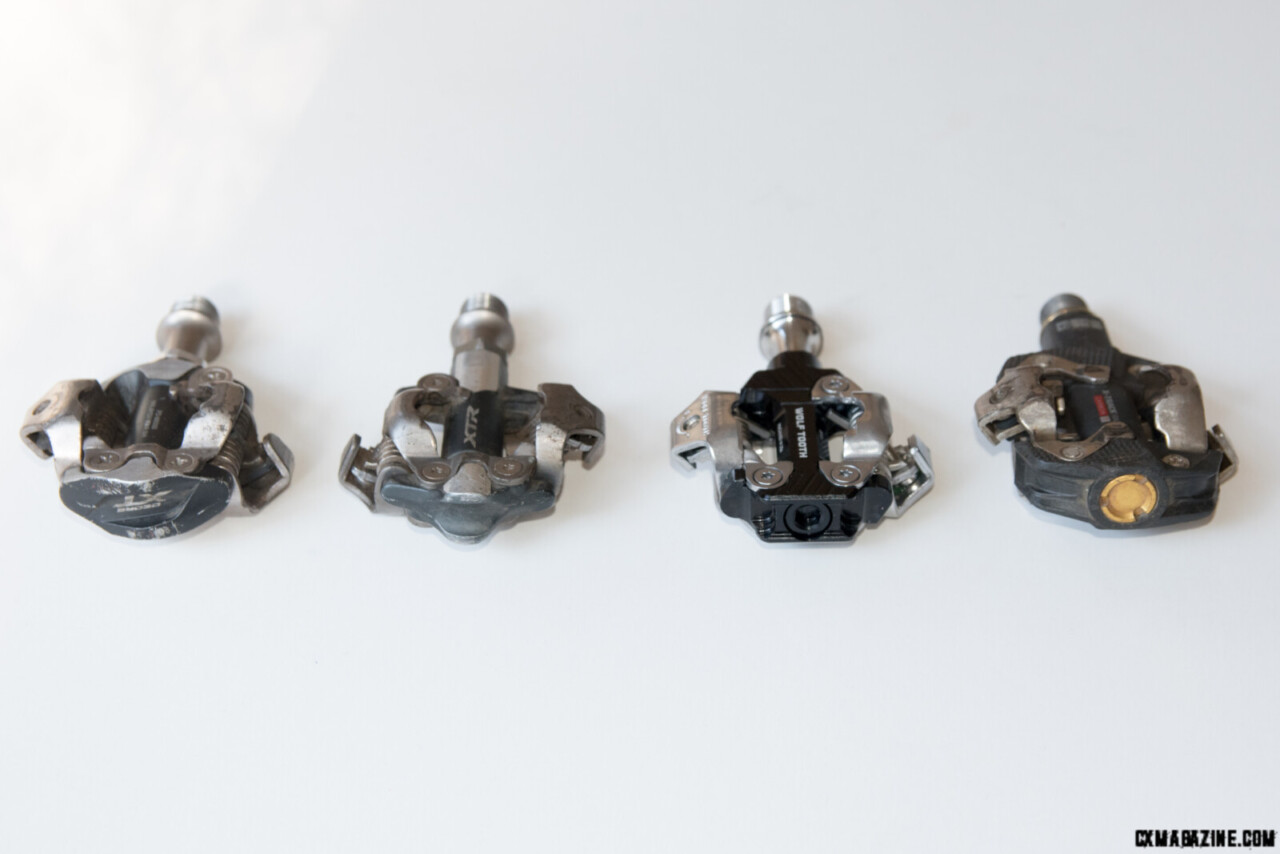
Which one of these is not like the others? The Wolf Tooth ALT has the thinnest body of this comparison.
Stack Height
Stack is the height of the cleat contact from the center of the pedal spindle. It’s hard to measure exactly, so I use pedal body thickness as a proxy for pedal stack height. The Wolf Tooth ALT pedal body thickness is 15.0mm. The next closest is the XTR M9100 with a pedal body thickness of 16.5mm. The Shimano XT M8000 and Look X-Track Carbon race are close to 20mm each.
Theoretically, stack height affects biomechanical power transfer. The idea is that the closer you are to the pedal rotation axis, the less energy you need to stabilize your foot when pedaling around the power arc. Theoretically, a negative stack height is the most stable. If you are old enough, you might remember the Shimano Dyna Drive pedals that set the sole 15mm below the virtual pedal spindle. I find it hard to distinguish between the pedaling stability and the stack height of the pedals in this comparison
Q Factor vs Stance
Q Factor in cycling is the horizontal distance from the outside face of the crankarm at the pedal hole to the outside face of the opposite crankarm. The parameter is a combination of the crank profile and spindle length, so unless you change cranksets, the Q factor is set for a given bike.
In bike fitting, the term stance refers to the rider’s posture, accounting for hip, knee, ankle, and foot alignment. On a bike, stance is affected by foot placement on the pedal. Hence, the Q factor and pedal axle length affect stance, and the theoretical goal in bioefficiency is to match a person’s natural stance while pedaling.
Bike Q factor varies by type. Road bike crank Q factor is generally 20mm narrower than mountain bike crank Q factor (150mm vs 170mm, respectively). With Shimano GRX and SRAM Dub Wide, gravel bikes now have a 5mm wider Q factor than road bikes.
One way to modify the stance is to change the effective Q factor. Changing cranksets is expensive, impractical, and sometimes incompatible with a bike. The easiest way to adjust stance width is to adjust the cleat position. The cleats on every pedal system have some lateral adjustment.
Changing the pedal spindle length can change the effective Q factor and affect the stance. To determine whether you need to change your stance, we recommend a professional bike fit with a certified bike fitter.
Wolf Tooth ALT Modifiable Stance
The Wolf Tooth ALT is the only pedal I know of that is easy to modify for stance width without changing the actual pedal spindle. The measurement from the crank face to the ALT pedal midline is 55mm. By simply loosening the endcap and then another nut within the endcap, the pedal body will slide off the spindle. There are three cartridge bearings and two spacers. Change the order of the bearings and spacers to move the pedal body 4mm inboard or 4mm outboard.
Shimano XTR is also 55mm to the pedal midline. You can get the Shimano XTR pedal with a shorter spindle and a 52mm midline measurement. I have only seen this as a pedal set, not the spindle as a separate after-market part.
The Verdict
All the pedals in this overview are fine. The Shimano SPD system is secure and reliable. The Wolf Tooth ALT stands out among the bunch with its light weight, low stack height, and the most solid shoe connection via tread contact. It has the added benefit of easily adjustable stance width, and the narrow spindle yields more open space in the pedal body, enhancing mud clearance.
The next closest performer in this comparison is the venerable Shimano XTR. It weighs only 14 grams more per pair and shares the same platform width. It is also available with a shorter spindle; however, the XTR is thicker, and the shoe wobbles a bit when engaged.
Engaging the pedals after a run in the mud is not materially different between the examples in this review, in my experience. I am not a heavy rider, and my experience with the Wolf Tooth ALT is in the hundreds of miles, whereas I’ve used the Shimano XTR for a thousand miles. Although it has performed flawlessly, I do not know the ALT’s long-term durability. I will say that even with solid shoe-lug contact, the anodization and the aluminum body hold up well.
The seals on the ALT have some drag that persists over the few hundred miles I’ve used them. That could be an annoyance with the one-sided Wolf Tooth DEL. The super-lightweight version is 217 grams per pair and aimed at gravel racers who use road pedals. With the two-sided ALT, it only represents a minor amount of drag that could sap a watt or two over the course of your ride.
The Wolf Tooth ALT is machined and assembled entirely in the USA at its Minnesota home. Another great thing is that small parts for the Wolf Tooth pedals are available, so the pedal is completely rebuildable. Wolf Tooth has committed to the right to repair. There is a wider mountain bike-oriented version called CTL, completing the Windows® operating system-based name scheme.
The Wolf Tooth ALT costs USD 20 more than the Shimano XTR. I would buy the ALT for its solid shoe connection and light weight. That extra ground clearance is a minor advantage, as is the flexibility to change my stance width if needed. Hey, Wout van Aert uses it!
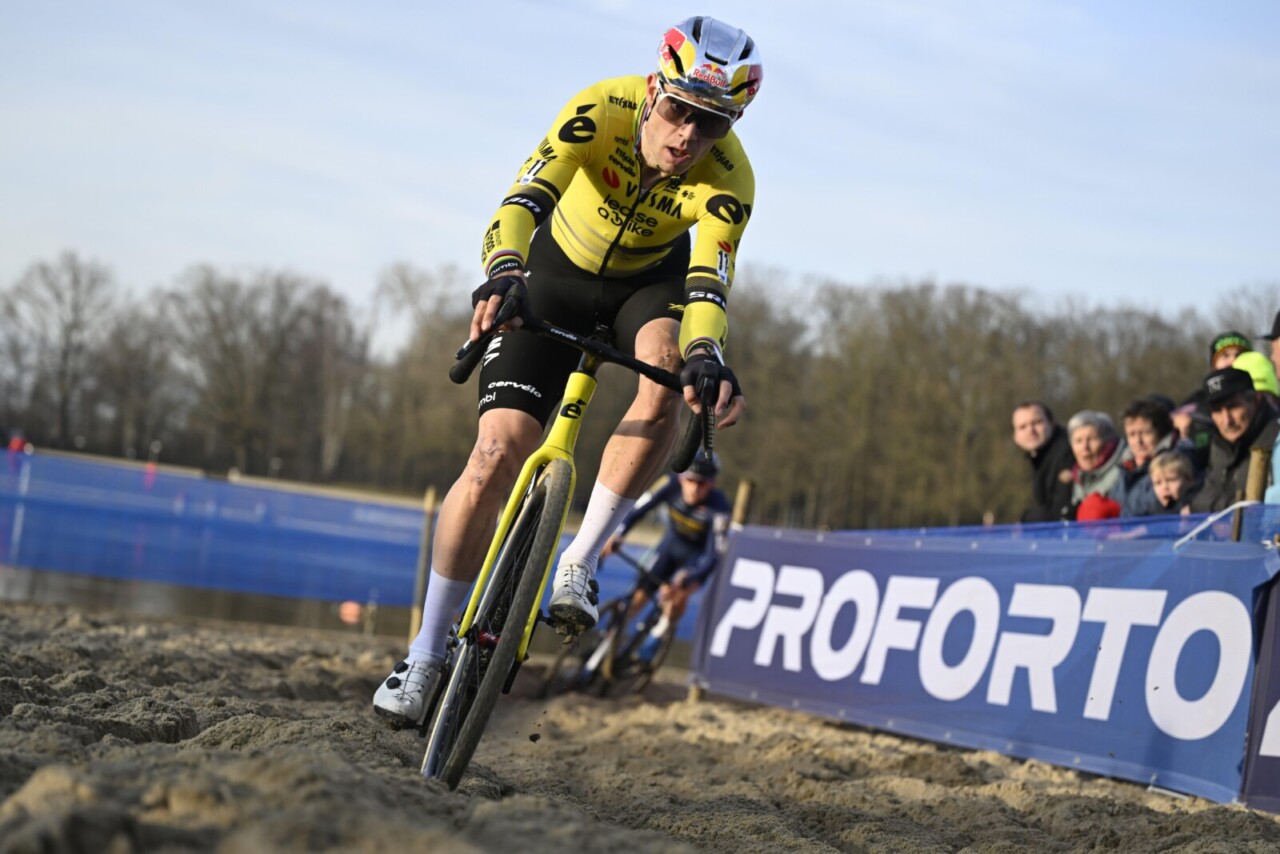
HOFSTADE, BELGIUM – DECEMBER 22 : Van Aert Wout (BEL) of Team Visma – Lease A Bike during the 4th leg of the Plage Cross X2O Badkamers Trofee 2025-2026 a cyclocross race for Men Elite on December 22, 2025 in Hofstade, Belgium, 22/12/2025 – Photo Nico Vereecken/ PN/ Cor Vos 2025
Wolf Tooth ALT Pedal Specifications:
Weight: 294g
Material:
Body: 6061-T6 aluminum CNC machined
Axle: heat-treated 17-4 PH stainless steel
Binding Cage: stainless steel; Hardware: stainless steel
Included: pedals, cleats with shims and bolts
Patent Pending
Machined in the USA
More info: www.wolftoothcomponents.com