




Helmets are an essential piece of cycling equipment that provides protection, but they must be comfortable for the wearer. Bicycle helmets were not commonly worn until the late 1980s. In 2003, the UCI mandated helmets at sanctioned events. Even then, helmet use grew throughout the 1990s, as rapidly developing helmet technology made them lighter, better ventilated, and more aerodynamic.
How a helmet fits each person varies. Most bicycle helmets have a fit system based on an inner band that tightens around the head, often with a dial at the back. In bicycle helmets, Giro was the first to use this fit device, a system they called the Roc Loc in 1994. Prior to that, the fit was solely utilizing straps and pads.
Helmet technology continues to evolve. We reviewed new helmets from Giro and POC.
POC Amidal
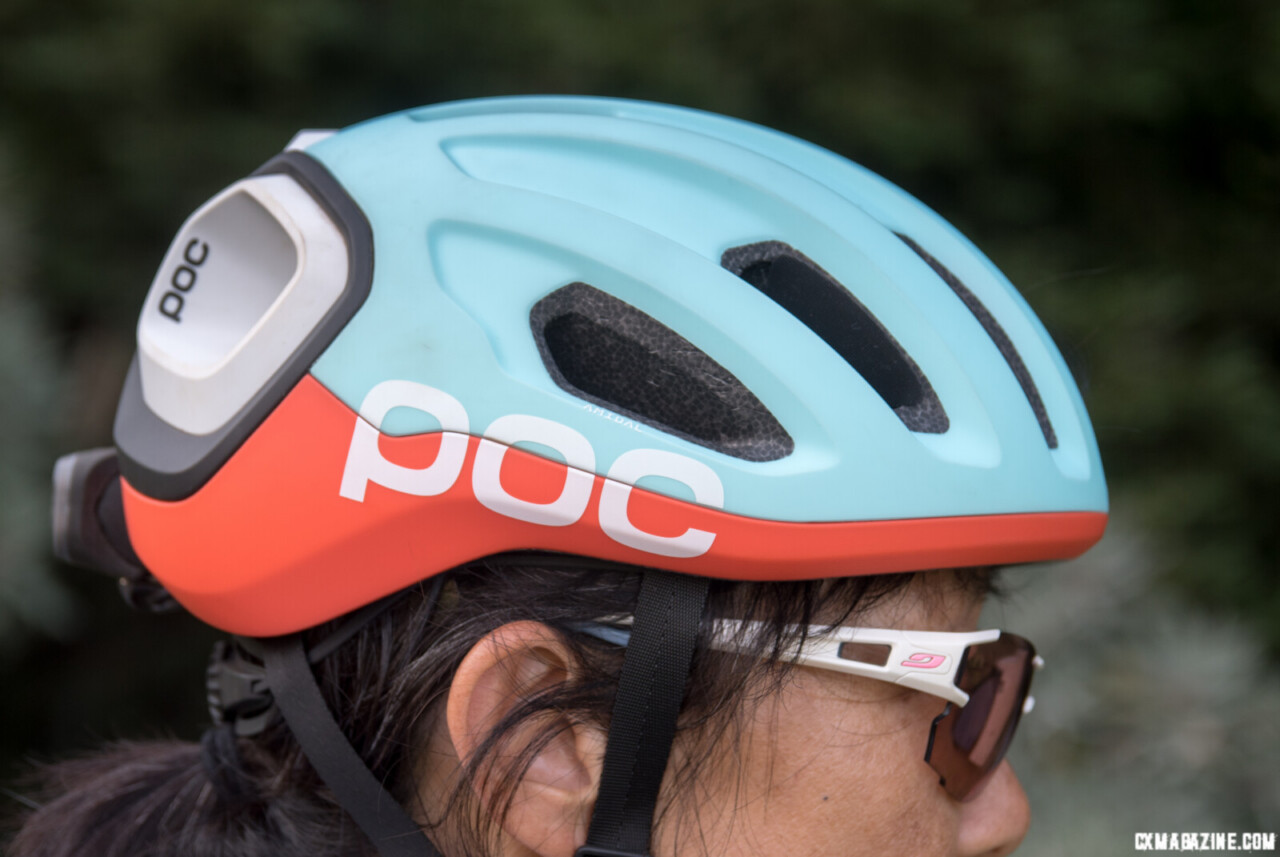
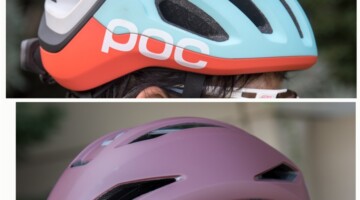
POC Amidal helmet has a low profile fit. It weighs 363 grams for size M
POC is a Swedish sports protective gear company and a significant player in bicycle helmets. POC is an early collaborator with MIPS®, a Swedish company that develops systems to enhance helmet impact protection. MIPS stands for Multi-directional Protection System. MIPS® licenses its products to helmet makers.
Helmets offer more than protection. They alter aerodynamics, change heat management, and offer fashion and style. POC has always varied from other helmets in the latter aspect with unusual shapes, large square vents and different colors such as hi-vis orange or pink.
This year, POC introduced the Amidal. This is POC’s new gravel, road, and commuting helmet. The profile is slimmer than other POC models and decidedly understated compared to some of POC’s other designs.
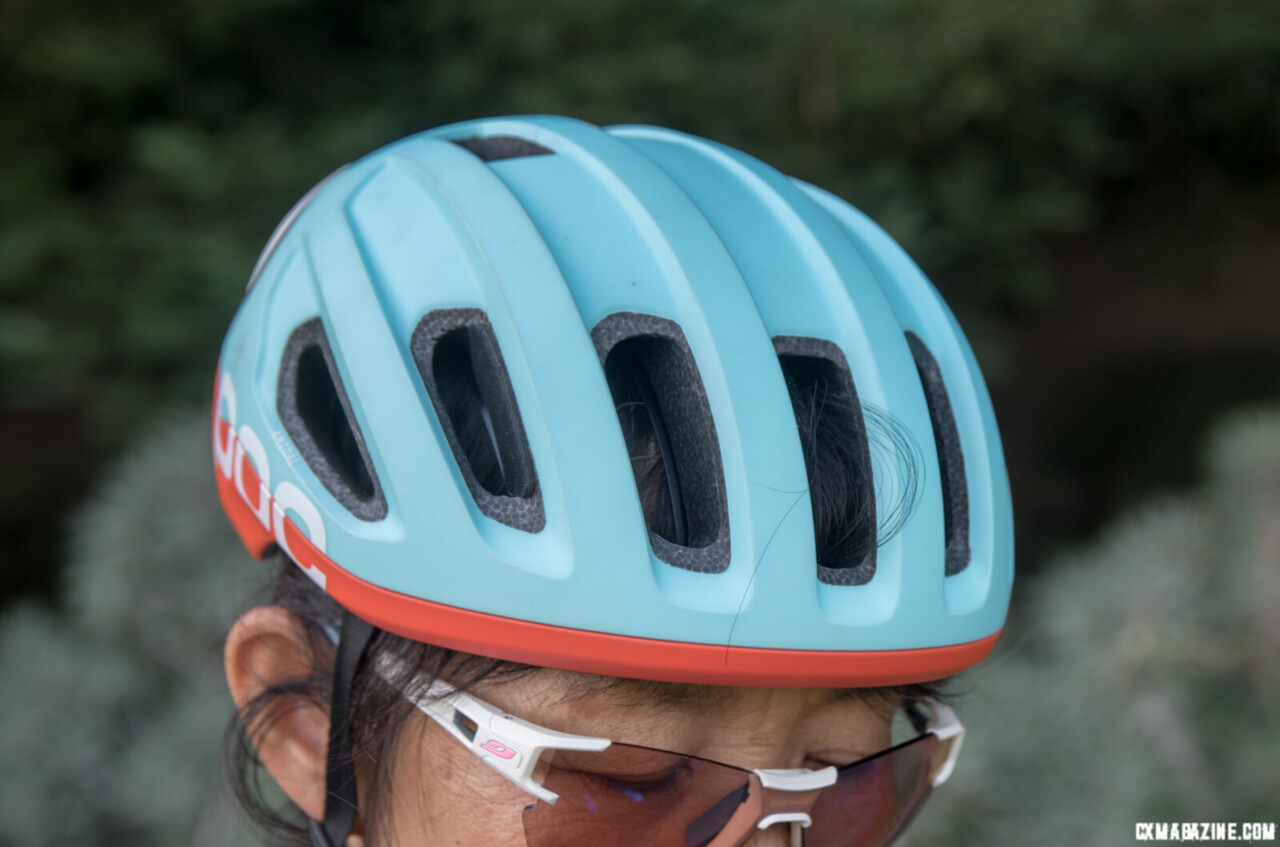
Despite the slim, low profile of the Amidal, there is still some POC design pedigree evident with the back vent design. We requested one of POC’s unique color combinations, one reminiscent of the blue and orange industrial water valves you might see while riding around.
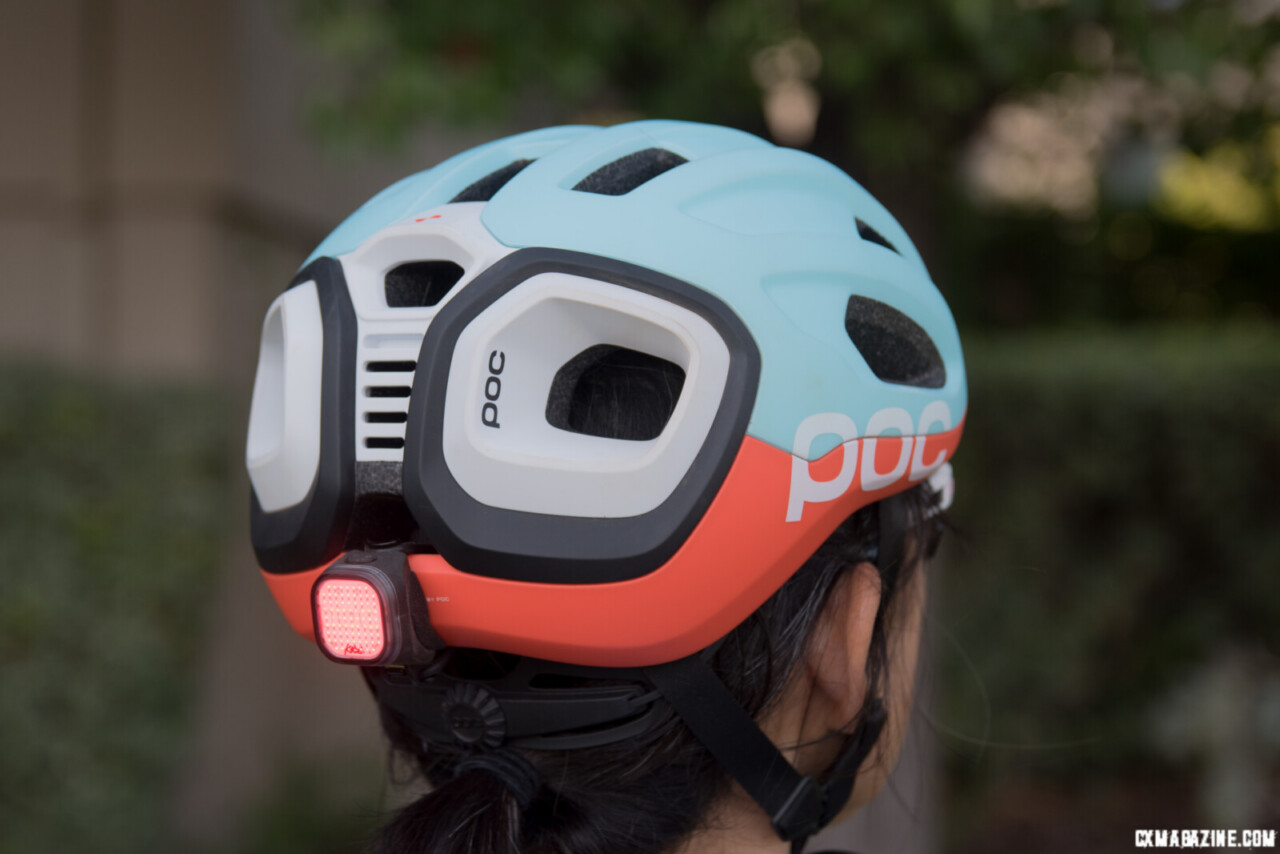
The POC Amidal helmet rear has a polarizing look. The Knog Mini helmet light integrates well.
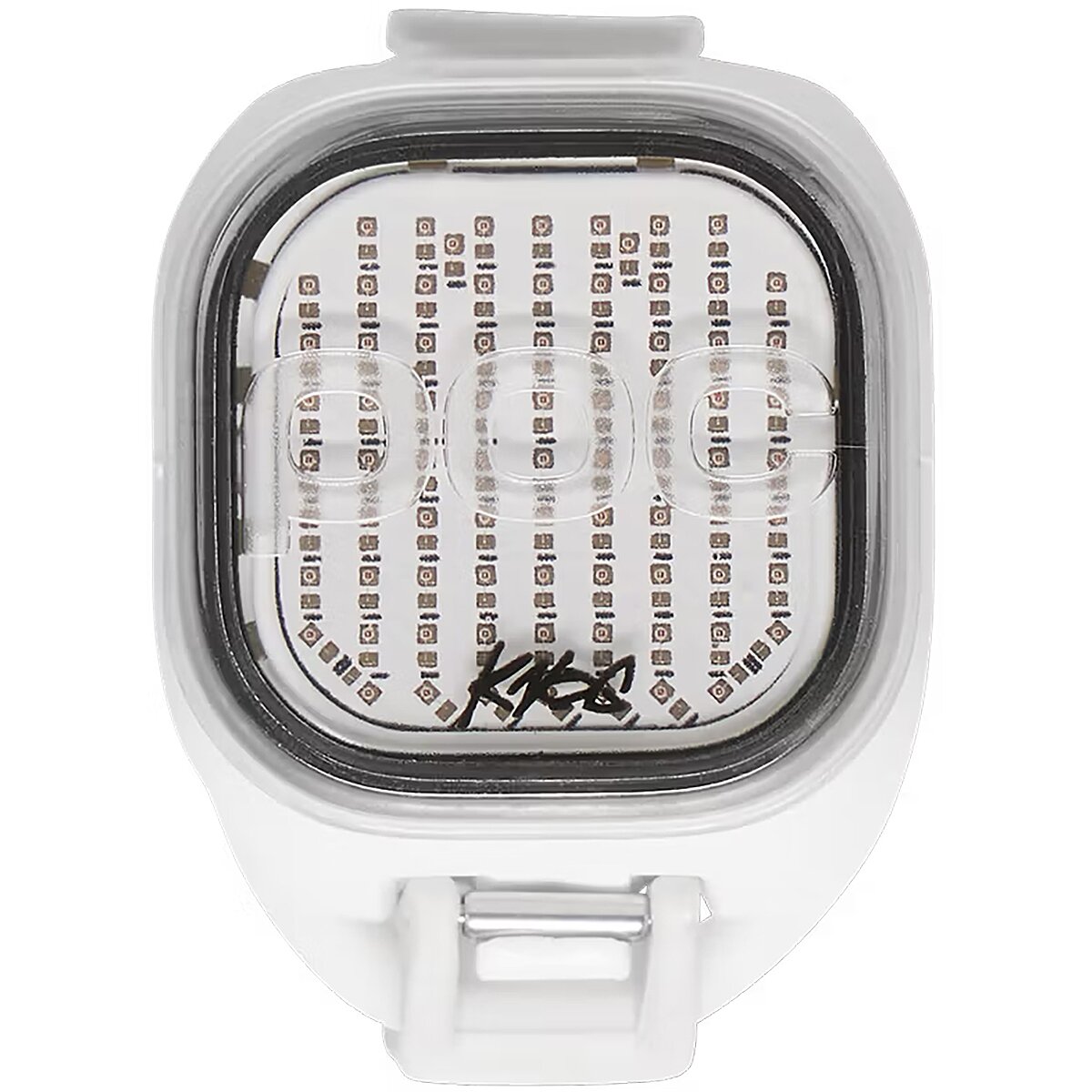
There is a Knog mini helmet light that integrates perfectly with the POC Amidal. The light is a Knog-POC collaboration available on the POC site to pair with the Amidal, or available separately. The light comes with a rubber wedge to perfectly match the contour of the Amidal.
POC Helmet Impact Performance
The Virginia Tech helmet rating website does not yet list the POC Amidal, but POC has two helmets in the top 10, so the company knows what it takes to provide ultimate safety. That said, every company has helmets that rate high for impact energy absorption, and others that perform less well. It remains to be seen how this rates, but the Amidal has good pedigree and the addition of MIPS® technology.
Riding with the POC Amidal
I like the way the POC Amidal looks. It is indeed a slim profile compared to many other helmets. I’m personally not so fond of the way the back vents look, but that is a matter of style, and it is a POC signature look. I also like the integrated Knog mini helmet light. It is bright, has two flashing and two steady light modes, and definitely adds a modicum of safety whether it is dark or a visually challenging traffic situation.
It is hard to know if the light is on. It takes 2 seconds to turn on with a push of a small button on top, and you can’t see it because it’s behind you. Turn it on before you put the helmet on for confirmation. If you activate it on the fly, be sure to firmly push the button for 2 seconds.
The POC strap system is secure, but complicated to adjust with a series of strap loops to loosen and tighten. The straps are in a closed loop with no exposed ends. This makes for a neat look, unless you have excess strap that creates a large loop at the end. POC has a video explaining the adjustment. The POC Amidal is further secured with a standard circumferential band tightened by a dial. POC calls their version the POC 360°fit system.
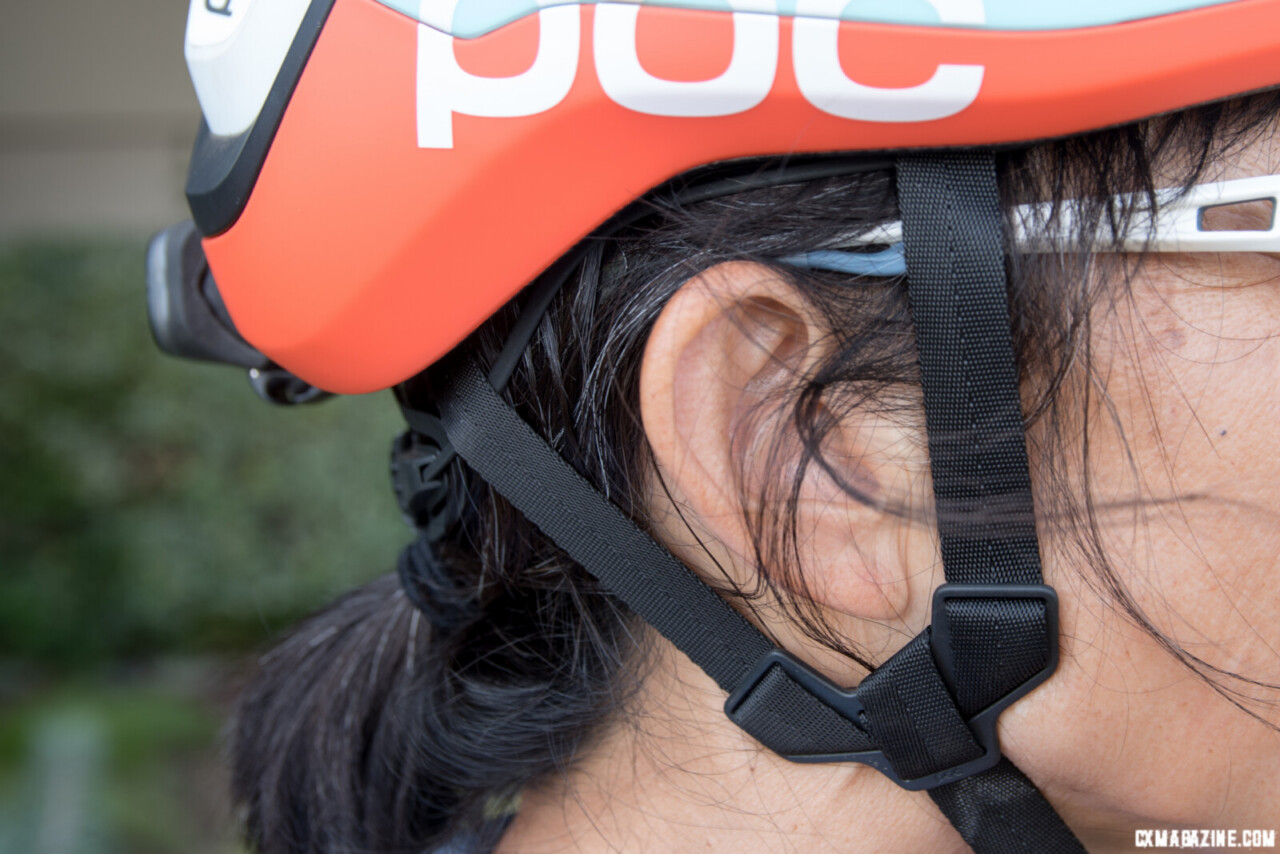
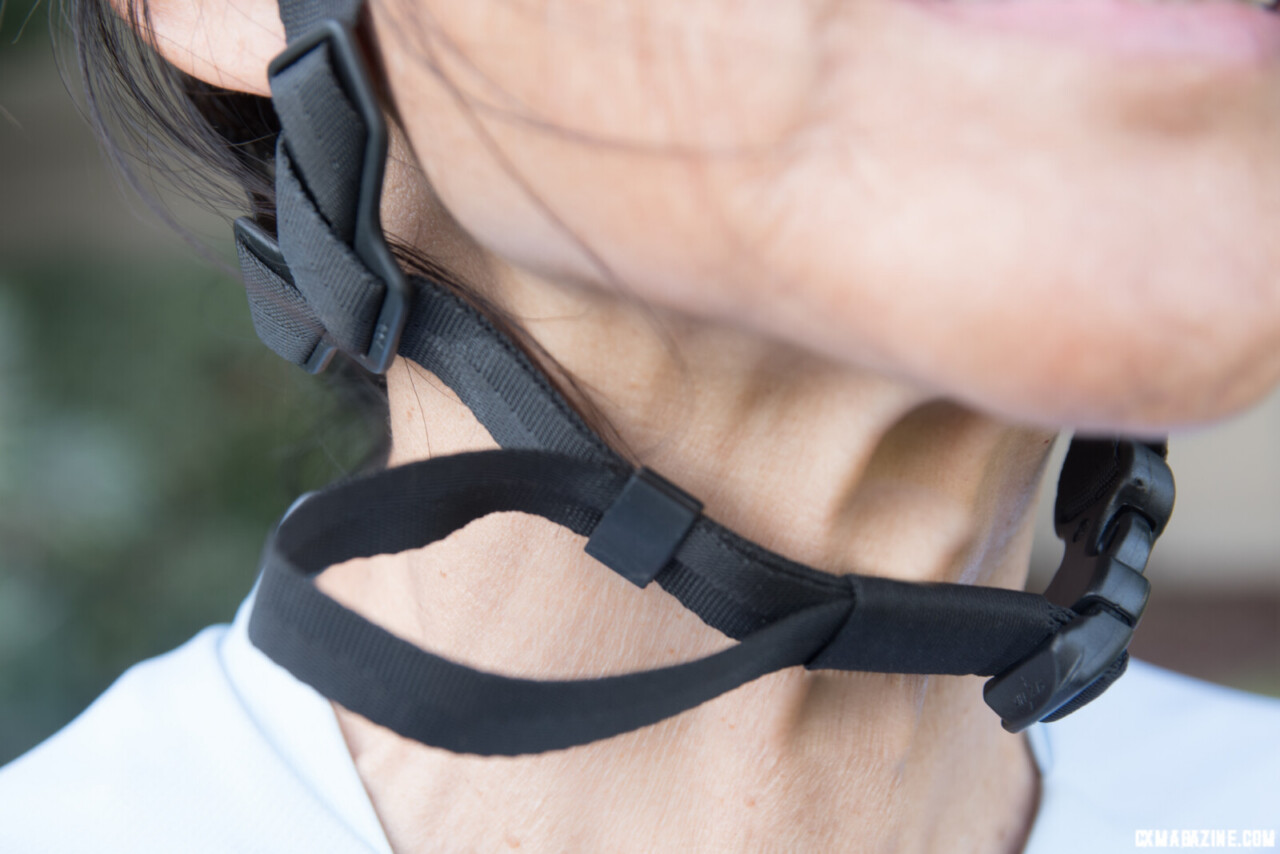
The POC Amidal helmet has an endless loop strap.
The POC Amidal is a heavy helmet. 363 grams is almost 100 grams heavier than most of the other helmets I’ve personally used. It is noticeable both when holding the helmet and when wearing it. Much of the weight is towards the back of the helmet.
POC does not have a wind tunnel, and the Amidal was not wind tunnel tested. Wearing a helmet is less aerodynamic than a bald, bare head and traps heat. POC uses CFD, computational fluid dynamics analysis, to model airflow over and through the helmet to optimize aerodynamics and cooling.
I rode with the Amidal in rather hot conditions on long brisk gravel rides and in one late summer cyclocross race. I felt it ventilated well with its six front vents and integrated internal channels that bring the air through to exit a the rear vents. I was midfield in both events, so I cannot say I had a significant aerodynamic benefit or deficit. The bright colors made me recognizable in a crowd.
POC Amidal Verdict
The POC Amidal is feature-loaded and a solid choice for versatility. It offers a good look with unique color combinations, a relatively slim profile, with iconic POC style. It has MIPS®-enhanced protection and an available companion helmet light. The Amidal ventilates well and the vents thoughtfully have grip pads to retain your glasses. This is a good helmet for long excursions where you benefit from ventilation and the safety of a rear light.
Considering the versatility of the POC Amidal, I wish it had a small removable visor for additional protection from the rain or low angled sun.
I don’t like the weight of the Amidal, and the straps are finicky to adjust, but once adjusted, it is secure. We’ll have to wait and see how it stacks up on the Virginia Tech helmet rating, but the Amidal has good pedigree.
More info: poc.com
POC Amidal Specs:
Weight: As tested, Size M 363 grams (no light attached)
Price: MSRP USD 270
Giro Eclipse Pro: Everyday Aero
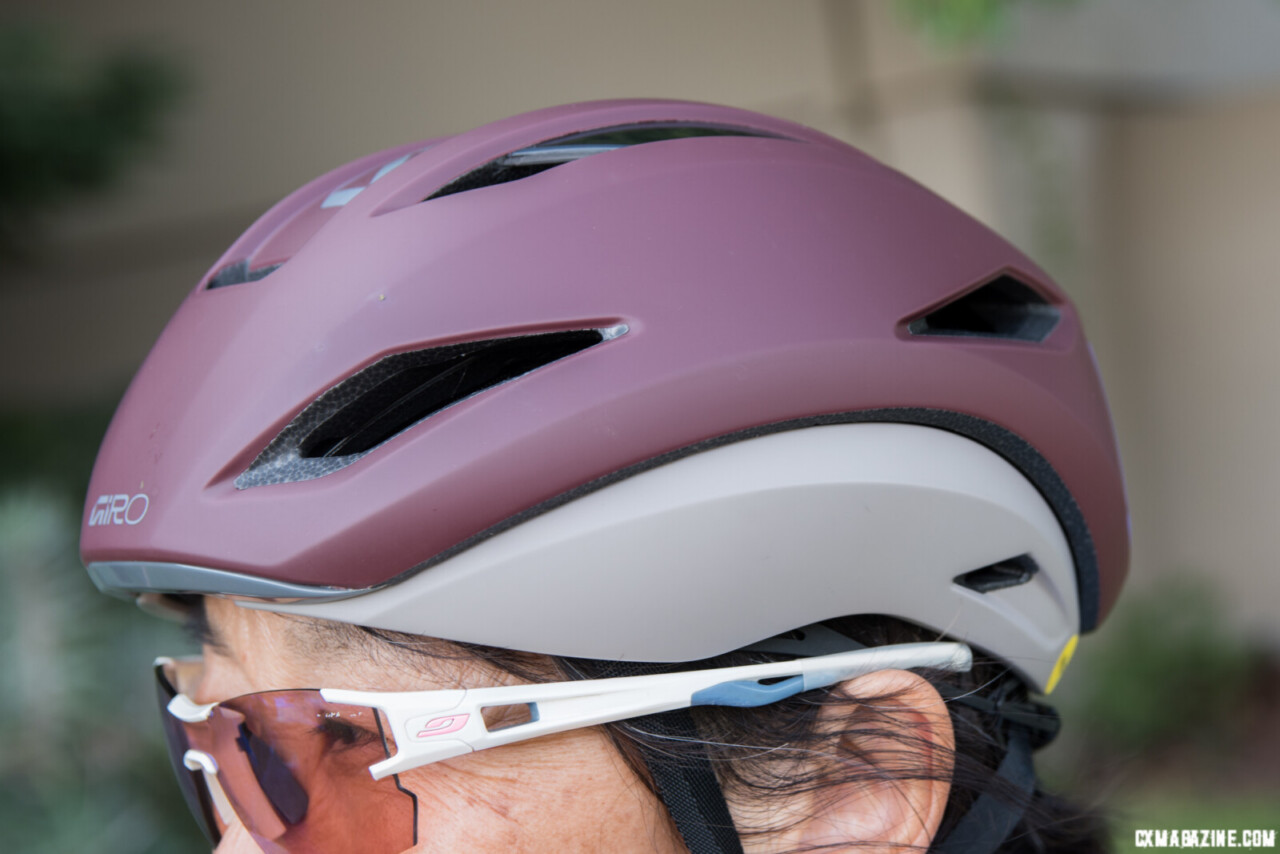
Giro Eclipse Pro has a few well-placed vents and is 283 grams.
Giro Sports has been in the helmet game since 1985. The company, started by bike racer Jim Gentes, who we still see lining up at local cyclocross races today, revolutionized bicycle helmets to become one of the biggest bicycle helmet innovators today.
This year Giro updated the Eclipse, their aerodynamic road helmet. The goal of the update is better aerodynamics and ventilation. We saw the new Giro Eclipse Pro helmet worn by WorldTour riders during the latter part of the 2025 season, and during the 2025-2026 cyclocross season.
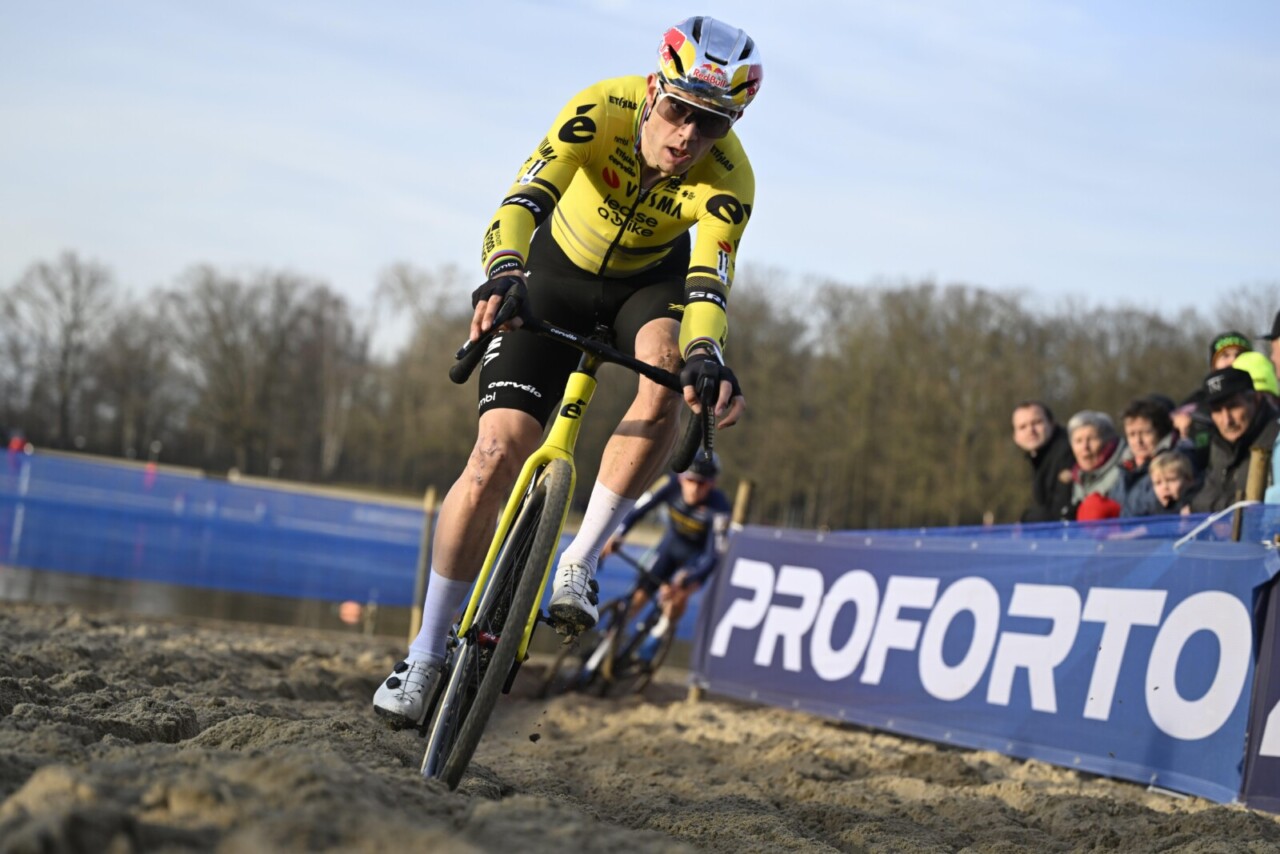
HOFSTADE, BELGIUM – DECEMBER 22 : Van Aert Wout (BEL) of Team Visma – Lease A Bike during the 4th leg of the Plage Cross X2O Badkamers Trofee 2025-2026 a cyclocross race for Men Elite on December 22, 2025 in Hofstade, Belgium, 22/12/2025 – Photo Nico Vereecken/ PN/ Cor Vos 2025
The Giro Eclipse Pro is an aerodynamic road racing helmet. Compared to Giro’s flagship Aries Spherical road helmet, the Eclipse Pro emphasizes aerodynamics while providing good enough ventilation for regular road racing, and somewhat matching the Aries weight. The Giro Spherical Technology is two thin helmets, one that pivots over the other-a helmet within a helmet. This is Giro’s application MIPS® technology.
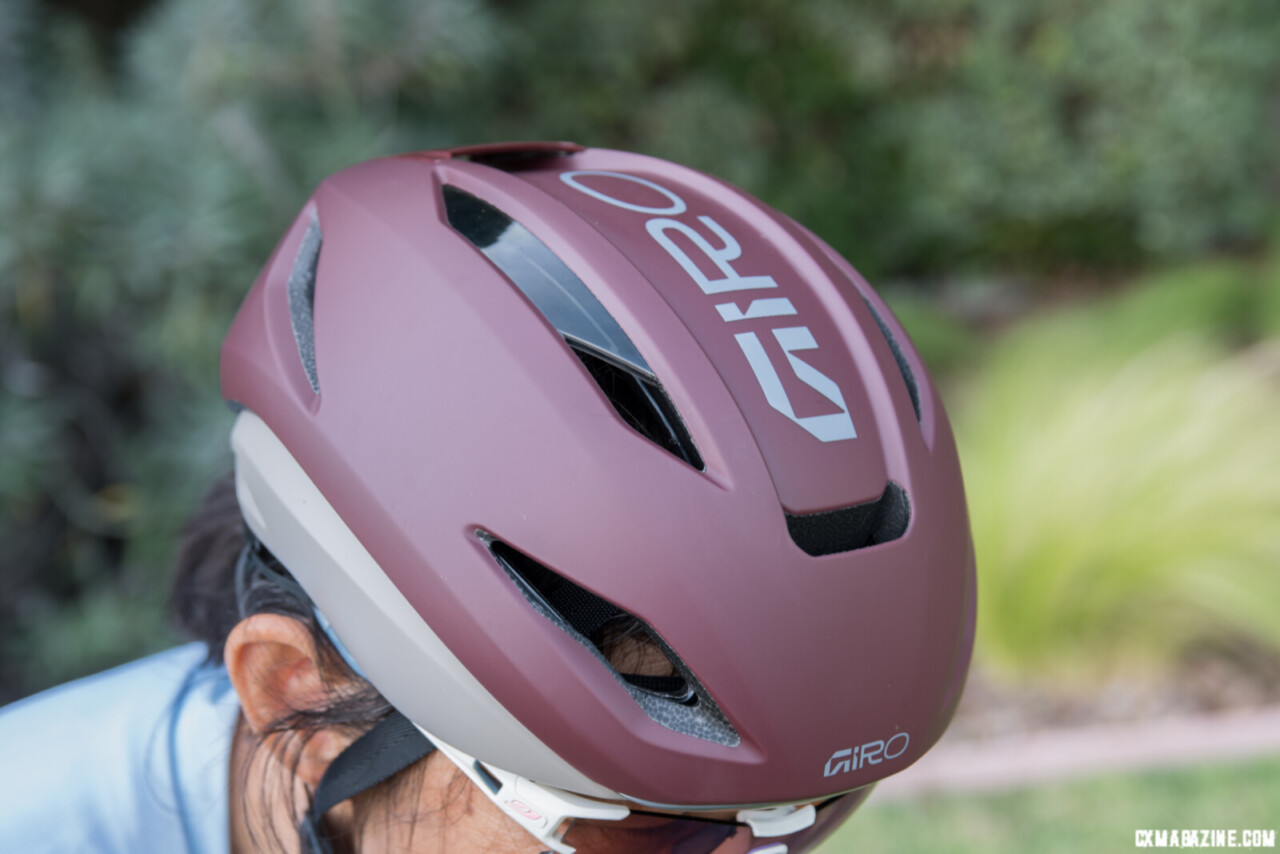
Giro Eclipse Pro aero road helmet has partially covered vents and a rear spoiler.
The Elipse Pro sample we have is a size M and is 283 grams. The size M Giro Aries sample we reviewed weighs 284 grams. Giro claims a 17% aerodynamic improvement compared to the previous Eclipse model. Giro uses CFD analysis for design, but verifies the design in a wind tunnel. There is no published data on the Giro Eclipse Pro, but one online site ran a wind-tunnel verified helmet review that included the old Eclipse and offered some insight.
To improve the aerodynamics of a bicycle helmet, reducing the number of vents to lessen air turbulence is effective. However, ventilation is a core component for comfort and performance since cycling generates a lot of heat. Therefore, placement of helmet vents is key. The Eclipse Pro has 15 vents. That means 15 holes in the helmet associated with internal channels. One vent in at the forehead, underneath the brim, at the junction of the two helmet shells. Two of the top vents appear large, but are 3/4 covered by clear plastic.
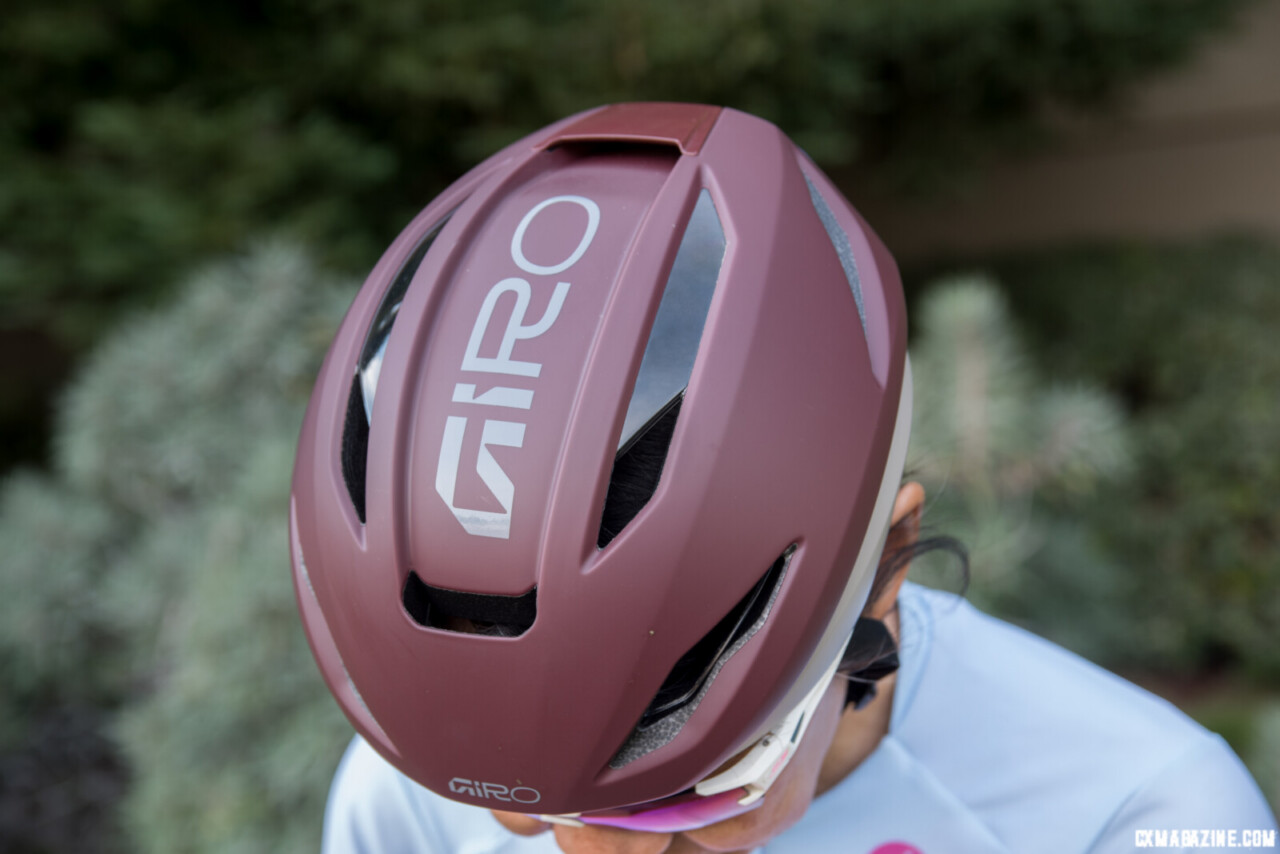
Giro Eclipse Pro aero road helmet has partially covered vents and a rear spoiler.
There is also an interesting rear spoiler that at first appears as a top-rear vent.
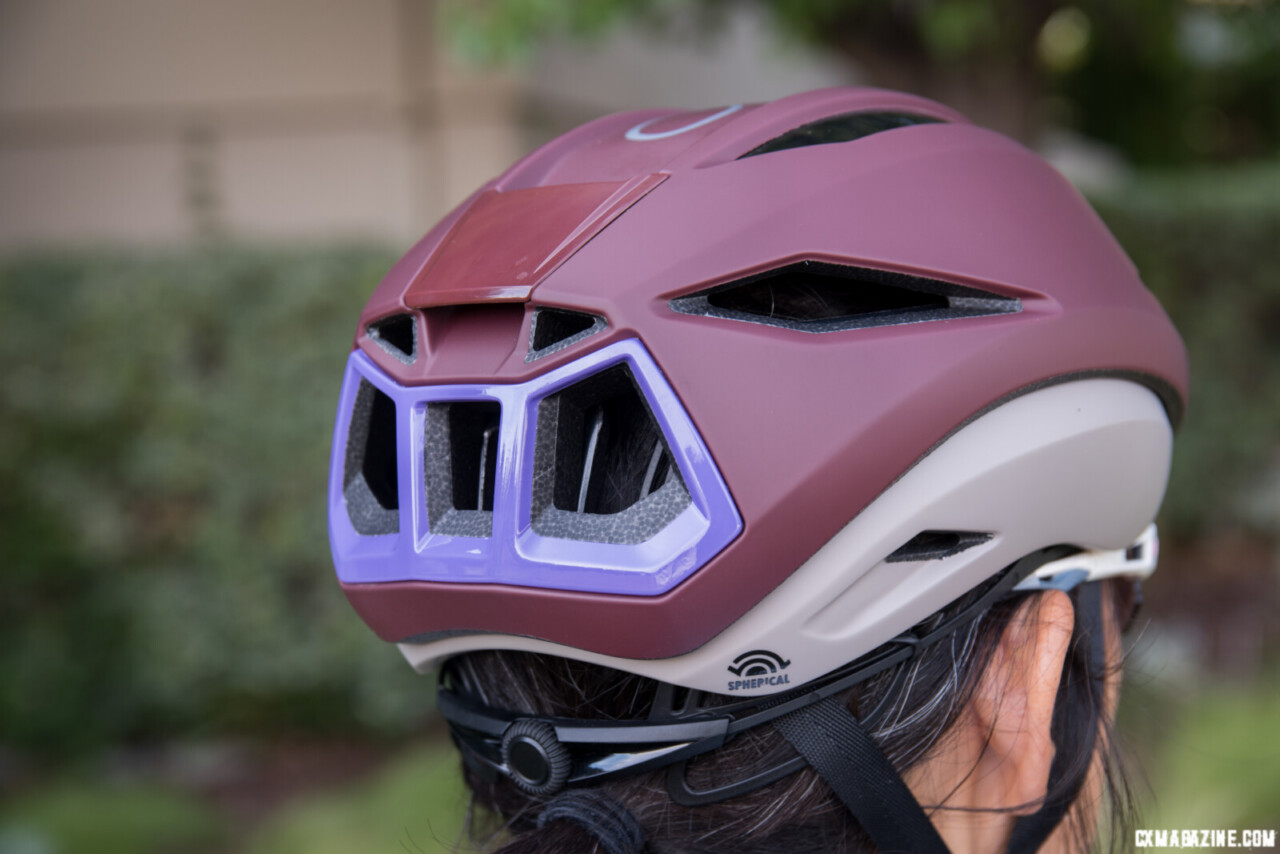
Grio Eclipse Pro rear vents. Note the wind spoiler at the top rear.
If you are interested in a detailed analysis of the aerodynamic characteristics of the Giro Eclipse Pro, the video below by QEF/Cycling Science is excellent.
Giro Helmet Impact Performance
The Giro Aries Spherical is one of the top rated helmets on the Virginia Tech Helmet Rating site for bicycle helmets. The previous Eclipse Spherical did not fare as well. We cannot speculate why one helmet with a similiar design outperforms another. The new Eclipse Pro is not listed in the ratings yet.
Riding with the Giro Eclipse Pro
Everyone benefits from aerodynamics. Even if you ride slowly, minimizing the effect of a headwind will reduce the effort to ride the bike. The helmet plays a role in this. If we can gain aerodynamic advantage with the same ventilation and comfort as the non-aerodynamic design, that’s a win.
The Giro strap system is simple to adjust and is effective at holding the helmet in place and close to the face.
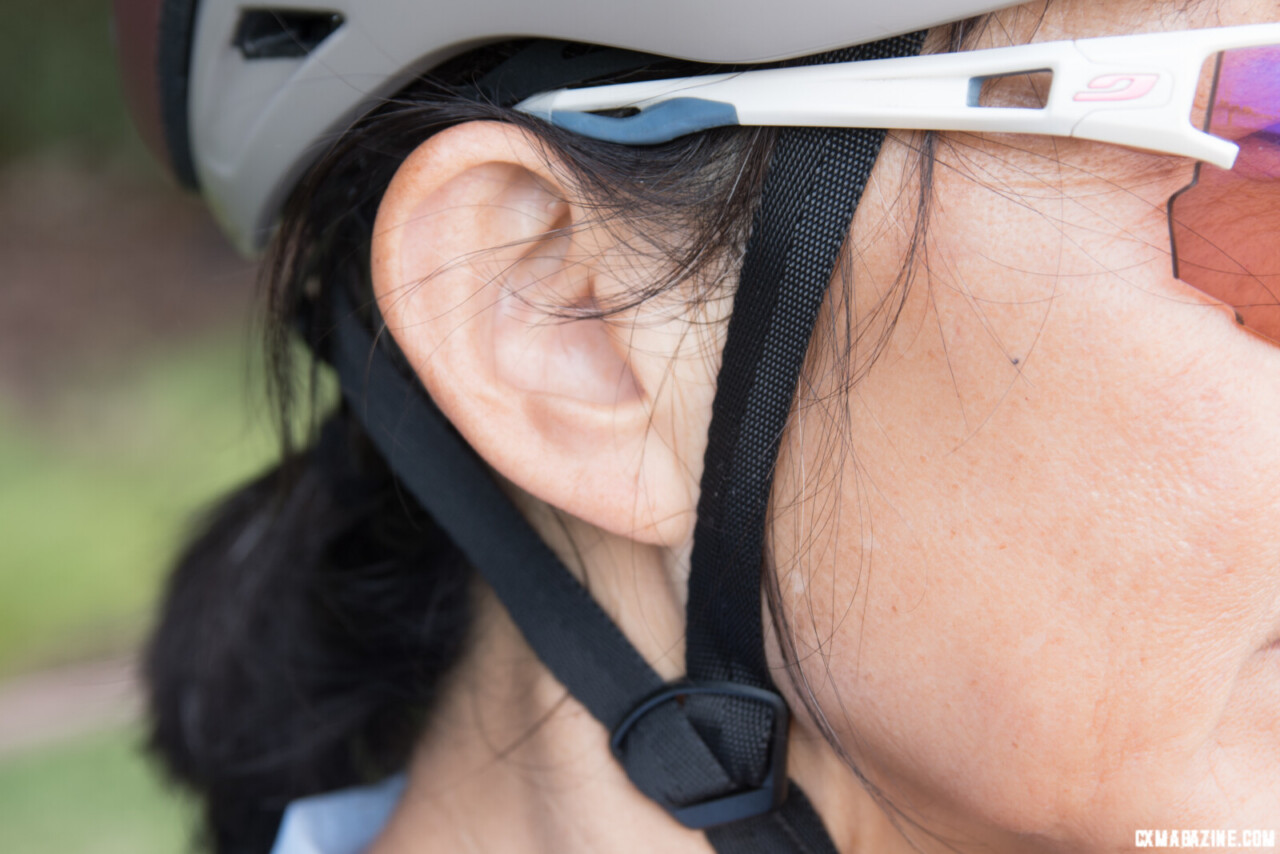
Giro Eclipse Pro strap system is less complicated.
The two strap ends are on one side and if you have excess, it can be cut for a neat arrangement. Giro’s updated Roc Loc® 5.5 system secures the helmet with a dial.
I rode with the Eclipse Pro on hot and cool days. I did a side-by-side comparison with the Giro Aries Spherical on a hot day. The ventilation on the Eclipse Pro is quite good as long as you are moving forward and pushing air through the vents. However, on a hot climb, when going slowly, the Eclipse Pro definitely made my head feel hotter than the Aries Spherical. There was a significant heat wave during the 2026 Tour de France, yet the Giro-sponsored riders still wore the Eclipse Pro for most stages.
Giro Eclipse Pro for Cyclocross
I think the perfect application for the Eclipse Pro is cyclocross. The racing is fast and largely in cooler weather. The vents keep you cool enough for an all-out hour race, yet the limited top openings keep rain and snow out if the conditions are frigid.
The Giro Eclipse Pro offers aerodynamic benefits for gravel and road racing’s longer format since you’re out in the wind for a longer time.
So while the aerodynamic benefit of using the Giro Eclipse Pro compared to a standard vented helmet is real, it’s also largely psychological. If you feel faster, perhaps you go faster.
Giro Eclipse Pro Verdict
The Giro Eclipse Pro is an aero-focussed racing helmet appropriate for road, gravel and cyclocross. This helmet is in the same category as the Van Rysel RCR-F, the Abus Game Changer, and the Specialized S-Works Evade 4 to name a few. The Eclipse Pro feels light on the head and offers some aero benefits while ventilating well in all but the hottest conditions. It is not the most aerodynamic road helmet in the genre, but it has some WorldTour panache, and that’s important to some.
Giro’s Spherical MIPS® design put the Aries Spherical model in the top road helmet rank on the Virginia Tech Helmet Rating website. That gives some indication of safety performance; however its predecessor, the Eclipse Spherical, though good, did not fare as well.
More info: giro.com
Giro Eclipse Pro Specs:
Weight: As tested, Size M 283 grams
Price: MSRP USD 375






No Comment