










Mechanical Monday: Re-gluing Tubulars

Pin It

Mechanical Monday is back, and we’re testing out a new feature: Reader Questions. If you have a mechanical question, feel free to ask it in the comments, on Twitter, on Facebook, or in our Cowbell Forum. Today, our topic is how to get tape off of tubulars, and if it’s possible to remove tires and then re-glue them for next season. Our reader is asking about the Belgian tape method of gluing, which we’ve written about in detail, if you don’t know what it is exactly.

Still don’t have tires for the upcoming season? We have a whole section devoted to tire reviews.
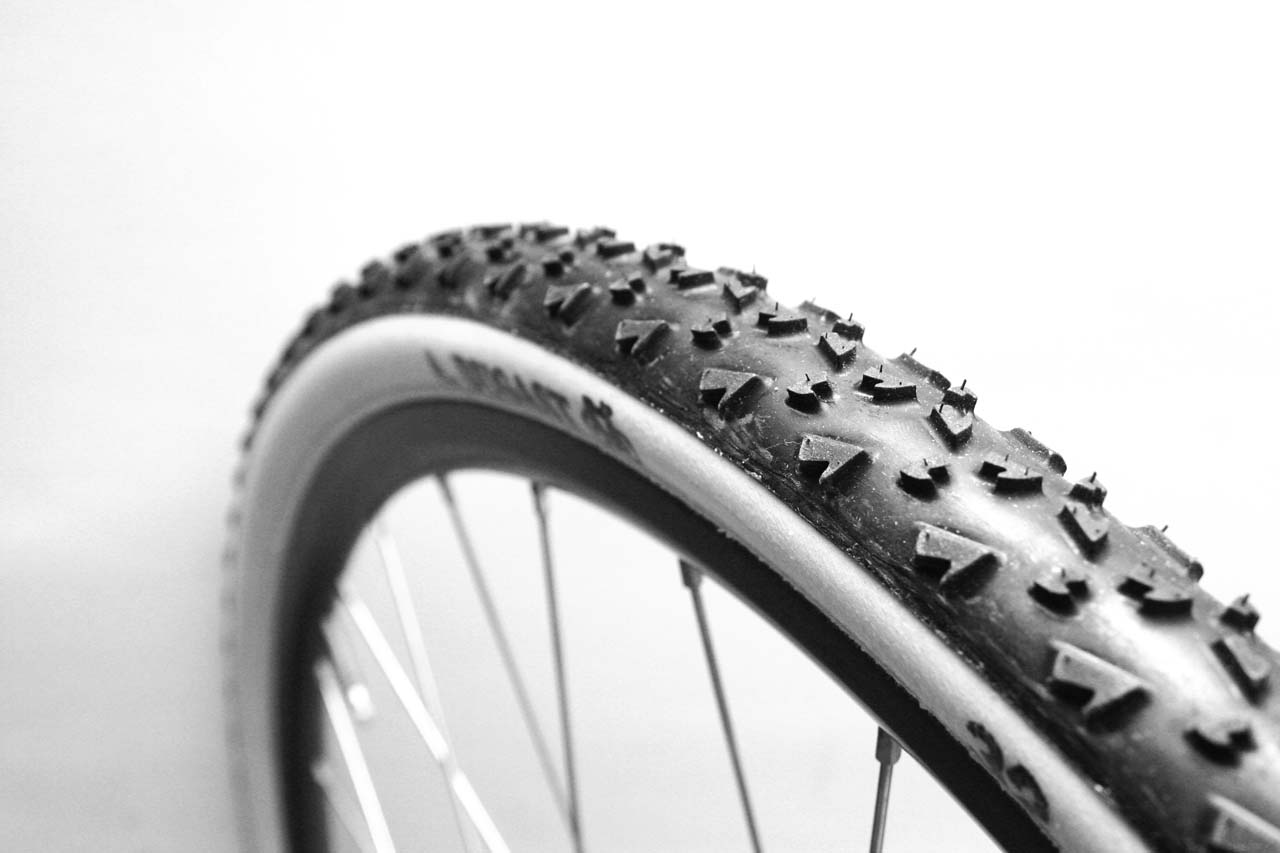
Gluing tubulars is a fine art, but a do-it-yourself strong, clean job is possible.

It is possible to re-glue your tires, so don't just rip them off hastily.

Today’s Question:

“I have a set of Challenge Grifo’s that I had glued up using the Belgian tape method. If I pull those tires off the rims, can I re-glue those tires for next season? What would I need to do to get the Belgian tape off or do I need to take it off to re-glue them?”

Jason Gardner of Jinji Cycles has the answer:

The answer to the first question is that yes, tires can be removed and then re-glued. When removing Belgian taped and glued tires, it is possible that some of the tape will come off with the tire and some will remain on the rim.  Also, it is possible, though unfortunate, that the base tape can stick to Belgian tape and stay on the rim. If that happens the tire may not be useable, so take extra care if you see the base tape starting to pull from the tire.  If you can remove the tire and keep as much tape on the rim as possible, your job will be much easier.

Once the tire is removed, the Belgian tape will need to be removed.  This will be the most difficult part because it rarely pulls off in one or even a few pieces.  The tape does, however, need to be removed since it does come off unevenly. You’ll just need to keep peeling and scraping at it until it’s mostly off.  I use a plastic tire lever for the scraping to avoid damaging the rim, especially if it is carbon. Do not use any solvents to remove the tape unless you are in for cleaning all tape and glue from the rim and starting with a fresh surface.  That’s a hefty load of work so avoid it unless it is absolutely necessary (or, if you’re paying someone else to do it, you should treat them like they just rescued your new puppy from a well).

That should give you a tire and wheel you can re-tape and glue for next season.

Final thought: don’t poke yourself in the eye while you’re removing the tape (I’ve “heard” it can happen).

Jason has also written his own article on gluing tubulars. And, of course, the best way to avoid re-gluing is to protect your tires while they’re firmly in place.

Tagged as: , , , , ,
Post comment as twitter logo facebook logo
Sort: Newest | Oldest
Tomboiboi 5 pts

I've never understood the reasoning behind "The Belgian Way". Today's "Mechanical Monday" story reinforces my skepticism and doesn't change my mind in the least about the pointlessness of sandwiching tape between two layers of glue and expecting that it somehow magically enhances the bond between tire and rim . As I understand it, the "Belgian Way" means you put a layer of Mastik One on the rim, then the Belgian Tape, then mores Mastik One on the tape then Mastik One on the base tape of the tubular. Then you put it all together. To me that seems the Mastik One is doing all the heavy lifting and the "Belgian Tape" is doing....what? In my view, Belgian Tape does nothing except make the removal and re-gluing process that much more tedious because you've got to remove the tape. I've glued hundreds of tubular tires for over 30 years and I've never rolled one. The secret is using several thin layers of glue and making sure that the glue is worked into the fabric of the base tape (I use an old toothbrush). Sandwiching a strip of tape between two layers of glue is the equivalent of sprinkling chicken blood.

cyclocross 8 pts moderator

 Tomboiboi Good points Tomboiboi, and at least one of us here at Cyclocross Magazine agrees with your point that just glue can do a mighty fine job by itself. From experience, the tape, while certainly making it way harder to remove/replace/reglue a tire, it seems like it offers a bit of extra "fill" and the benefit may actually be more to fill gaps between the rim and the tire, especially when the profiles aren't exactly the same, as opposed to actually the adhesive actually "magically enhancing" the bond.  The other benefit is for folks who don't take the time/care to do many layers, as it can avoid dry spots that are lacking glue and contact between the tire and rim.  No reason for you to use tape, as just glue already works well for you, and is certainly without a doubt easier to reglue a tire and rim that hasn't had tape on it.  


Tomboiboi 5 pts

 cyclocross I note your points and understand your reasoning. I think though that you can get the "fill" you're looking for and avoid dry spots by doing the job well - multiple thin layers of glue (and I agree that Mastik One is the best). I also think it is VERY important to work the glue into the fabric of the base tape with a tooth brush rather than just smearing it on with your finger. Otherwise you'll have less-than-optimal adhesion whether you're using "Belgian tape" or doing it the old-fashioned way. Kind regards.

Search the Cyclocross Magazine Archives

Follow Us

Support these CX-loving companies:


Polls

What upgrades are you thinking about for next season?

View Results

Loading ... Loading ...