









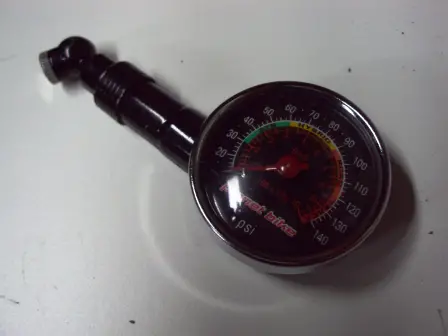
Planet Bike's portable gauge offering makes for a nice stocking stuffer © Dave Drumm
If you’re like us, and we’re betting you are, you’re currently going through your gear and figuring out what little things you need for the season. This Monday, we’re re-running an article Dave Drumm wrote for us about the importance of having a pressure gauge for your tires. They’re cheap, and won’t take up too much room in your race bag, so if you don’t already have one, add it to the shopping list!
Even after racing Masters 40+ at Nationals, and then tending to Amy Dombroski’s bikes during the Elite Women’s race, Dave Drumm still managed to get his weekly wrenching tips in on time. Not so for us, the editorial staff, still reeling from an amazing, crazy week in Bend. So we may be getting this week’s Mechanical Monday up a little late, but we hope you’ll agree that Drumm’s tips are always worth the wait.
This is the re-release of our fourth installment in a weekly series of from-the-crew-pit tips. Some will be straight-forward, others more involved, but they’ll all help you to keep your cyclocross bike humming smoothly along. Catch up on week three’s conical brush gush here.
by Dave Drumm
Everyone that races ‘cross knows that the correct tire pressure for course conditions can mean the difference between railing the turns and picking yourself up off the ground. The Cyclocross National Championships in Bend represented a challenge for even the most seasoned racers and mechanics. The conditions not only changed day to day but hour by hour and, in some cases, halfway through a race. During pre-rides, many riders were borrowing pumps from the nearest source to make adjustments before taking another lap, making a mental note of the pressure for later use. But is the ideal pressure you read about really the pressure that was in the tire?
The floor pump is a vital tool for any racer, but it is also the tool that gets abused the most. After the race, it gets thrown in the car, it gets knocked over in the garage or tossed in a corner. So, after all the abuse we put our pumps through, how accurate is that gauge? Furthermore, the gauge isn’t reading the pressure in the tire – it’s reading the pressure in the hose. Were you really running 28psi to hook up on that icy slop? Or was that gauge off by a few psi because it’s been kicked around one to many times and you were actually running 25psi? The difference in 1 or 2psi is amazing in slippery conditions. So what if your pump is off by 5psi or more? What about that one you just borrowed 10 minutes before your race? To alleviate this problem, I suggest you invest in a good quality low pressure tire gauge and you treat it like a newborn. Carry it with you in your jersey pocket during pre-ride, carry it with you up until the start for any last minute changes, then hand it off to your buddy with your warm-up clothes at the line.
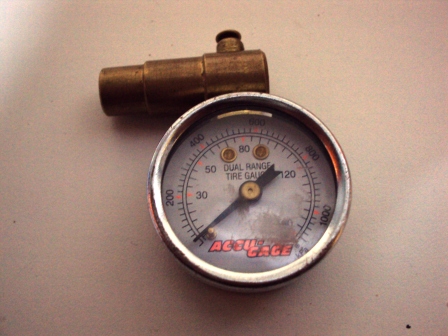
Accu-Gauge offers old-school look and reliability © Dave Drumm
Buy a gauge and use that same gauge every time you air up or make an adjustment. That way you will ensure that the pressures you are running are constants, by your own personal tire gauge.
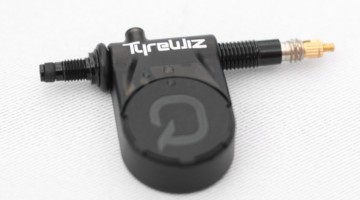
I prefer digital gauges like the Smart Gauge by Topeak. Slime also makes a nice digital gauge that reads 0-150psi for less than $20. If you prefer a dial gauge, Planet Bike makes a good quality gauge, as does Accu-Gauge. These two retail for less than $20 and have a dial lock so that pressure will remain indicated on the dial until you press the release valve. Stay away from the sliding bar style gauges; they are not as reliable and are clumsy to use. The best place to buy a quality gauge is your local bike shop and they make great stocking stuffers!